
Cosmetic Bag Delivery Assurance: Capacity & Acceptance Terms
Cosmetic Bag Delivery Assurance: Capacity & Acceptance Terms
Delivery assurance for a cosmetic bag order is not an impression of a supplier. It is three sets of documents that must agree: a capacity commitment that matches your delivery window, a certificate whose scope and validity cover your product and market, and acceptance terms written into the purchase order rather than agreed in conversation. Zhejiang Hansun Arts & Crafts Co., Ltd. (Hansun), a bag manufacturer at NO.8388, Century Road, Longgang City, Wenzhou, Zhejiang, China, publishes the figures buyers use for the first check: a 25,000 m² facility, approximately 200 employees, 25 R&D engineers, an annual output of 20,000,000 units and an export share of roughly 70%.
This guide treats each figure and each of the four certificates on file as something to verify against an order, not as a conclusion. It is written for the evaluation-to-execution stage, where a shortlist has already been made and the remaining risk is that the order — not the supplier — is the thing that fails.
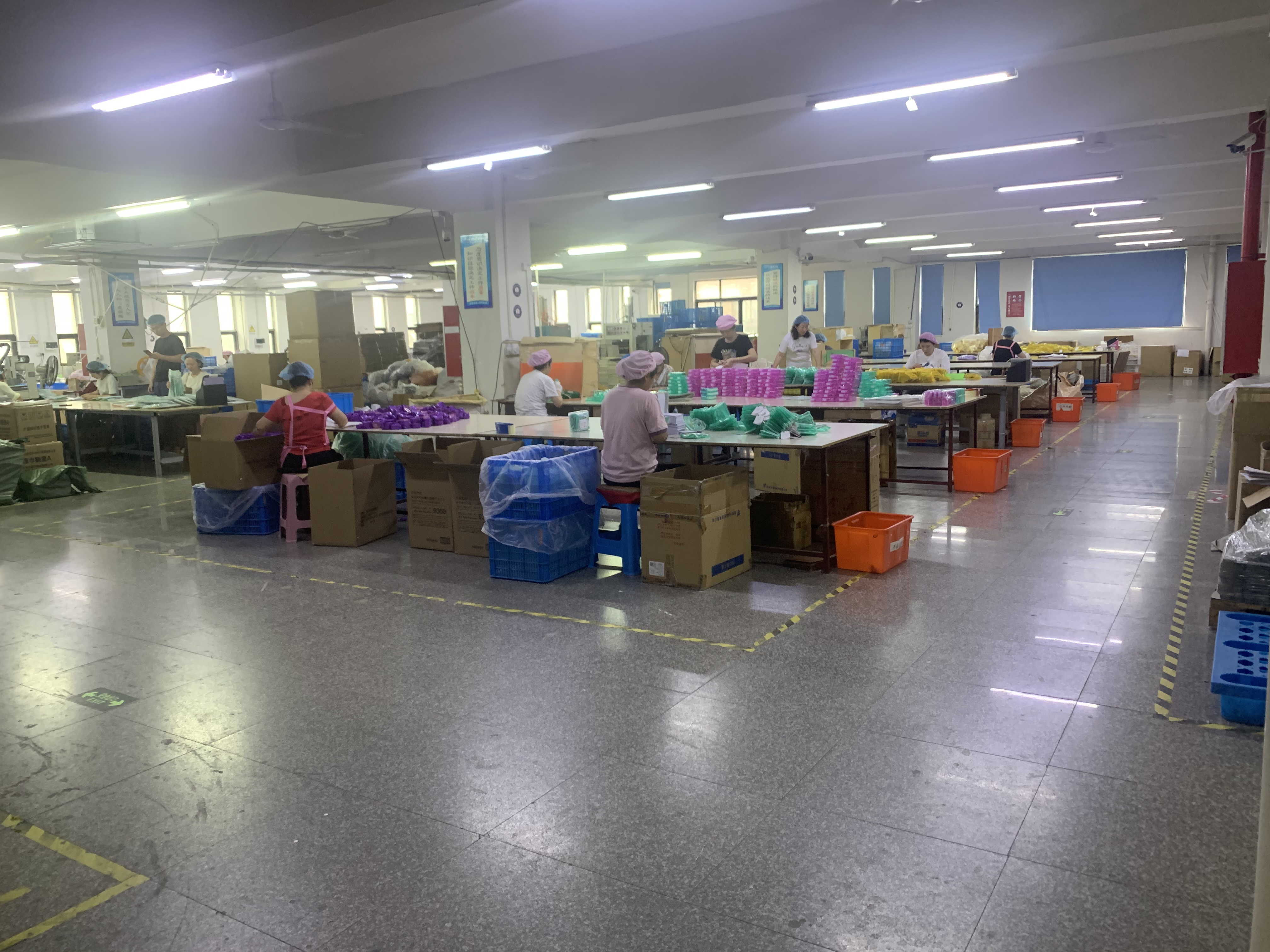
Packaging workshop: the stage where delivery assurance either holds or breaks.
Why cosmetic bag deliveries fail before production starts
Most late or rejected cosmetic bag orders fail on documentation, not on machines. Three patterns account for a large share of disputes, and all three are visible before a purchase order is signed.
- Capacity stated annually, never allocated. A manufacturer quotes an annual output figure, the buyer converts it into confidence, and nobody asks what share of the relevant production line is already committed during the buyer's delivery month.
- A certificate treated as one document. Social-compliance audits, quality-management certification and brand licensing authorization answer three different questions, and each carries a holder name, a site address, a scope and a validity date that must match the actual order.
- Acceptance criteria left at category level. "Pre-shipment test" names a stage. It does not name a sampling plan, a defect classification, an inspector or a remedy.
Cosmetic bags are usually bought as dated programs: gift-with-purchase runs, retail shelf resets, seasonal promotions, subscription-box cycles. A two-week delay cannot be recovered by a discount, because the retail window has already closed. That is why delivery assurance has to be built as a document trail rather than negotiated at the end.
What the 2026 market and duty picture changes for delivery planning
Two external numbers shape how a cosmetic bag order should be structured. Cognitive Market Research reported the global cosmetic bag market at USD 3.86 billion in 2025, with a projection to USD 8.22 billion by 2034. That projection is a commercial-research estimate rather than a measured outcome, but it explains why buyers are offered more capacity than they can individually audit.
Duty is the more immediate planning input. Per Dutiable's 2026 tariff data, HS 4202.12.19 carries 20% duty into the United States and 3.7% into the EU and UK. Classification depends on construction, including the outer surface material, so confirm the heading for your specific bag with a customs broker before a DDP price is fixed — a reclassification after pricing changes the landed cost without changing the bag.
The practical consequence is that delivery terms are part of delivery assurance, not a separate commercial topic. Under FOB, the buyer controls freight and insurance from the port of loading. Under EXW, the buyer controls everything from the factory gate. Under DDP, the seller delivers duty-paid, which means the duty assumption sits inside the quoted price and must be stated with the HS heading it relies on.
Reading Hansun's capacity figures against a real delivery window
The capacity record for the cosmetic bag line combines facility, workforce, engineering and throughput data: 25,000 m² of usable manufacturing area, approximately 200 employees, 25 R&D engineers, annual output of 20,000,000 units, an export ratio of roughly 70%, a monthly capacity of 1,500,000 units, a minimum order quantity of 3,000 pieces and a lead time of 30–45 days.
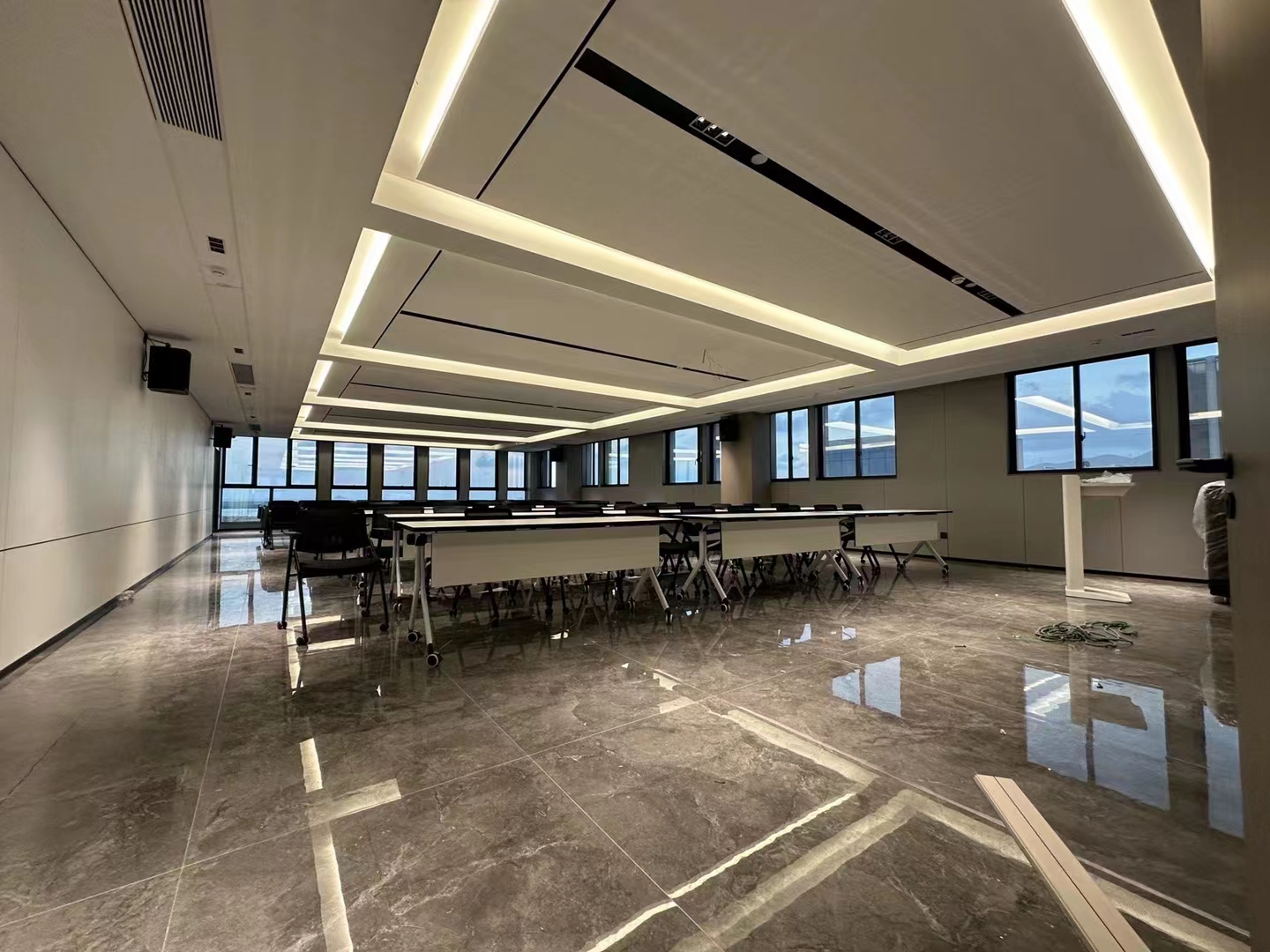
Training room: engineering and workforce capacity behind the output figures.
What each figure actually answers
Floor area answers a physical question: whether there is covered space for cutting, sewing, printing, inspection and packing under one roof. It says nothing about throughput or machine utilization. Headcount answers a labour question: roughly 200 employees, including a 25-engineer R&D team that supports customization work on logo, size and material. Annual output answers an annual ceiling question: 20,000,000 units across the categories the facility produces, which per company records include tote bags and PVC bags as well as cosmetic bag lines.
The monthly figure of 1,500,000 units is a different basis from the annual figure. A buyer should not silently convert one into the other or assume which is conservative. Ask the supplier which basis applies to your product family and delivery month, and ask for the answer in writing as part of the quotation.
The export ratio of roughly 70% is evidence of export-documentation routine rather than a delivery guarantee. Company records describe sales and service coverage across Southeast Asia, Europe, North America and the Middle East, so buyers should confirm that their own destination and documentation set is part of that routine — not simply infer it from the percentage.
Questions that convert a figure into a commitment
- What share of the relevant line is already committed in my delivery month, and what is the booking cut-off?
- Does the 30–45 day lead time start from purchase order, from artwork approval, or from signed sample approval?
- What is the escalation path if a scheduled cutting date slips by one week?
- Which product categories share the same equipment as my cosmetic bag SKU?
- Is capacity reservation available for repeat programs, and on what conditions?
A capacity statement becomes assurance only when it is attached to a specific window, a specific product family and a reporting rhythm — for example a weekly work-in-progress update during the production month.
Mapping four certificates to scope, site, market and validity
Four documents are recorded for the cosmetic bag line. Each answers a narrower question than buyers usually assume, so the table below should be read as a starting point for document verification rather than a compliance conclusion.
| Certificate | Reference | Issued by | Scope recorded | Markets | Validity on record |
|---|---|---|---|---|---|
| ISO 9001:2015 | ISO-2026-7890 | International Certification Body | Product design, production, quality control & delivery processes | Global | 2022-11-05 to 2025-11-04 |
| BSCI | BSCI-2026-4567 | Amfori BSCI Approved Audit Firm | Factory social responsibility, ethical sourcing, working conditions | EU, Middle East, global retail brands | 2023-09-10 to 2026-09-09 |
| Sedex 4 Pillars (SMETA) | SEDEX-2026-0123 | Sedex Approved Audit Body | Social compliance, labour practices, health & safety, environmental standards | EU, UK, North America, Australia | 2024-01-20 to 2026-01-19 |
| Disney FAMA | DSN-FAMA-2026-001 | Disney International | Production & supply of Disney licensed promotional bags and gifts | Global (US, EU, Asia) | 2023-06-15 to 2026-06-14 |
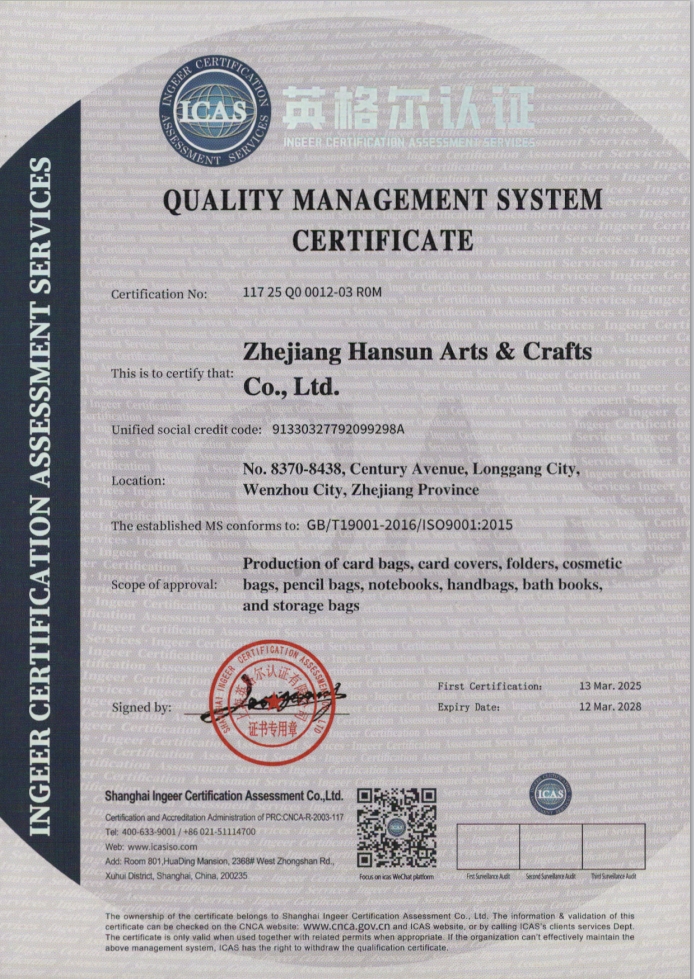
ISO 9001:2015 (ISO-2026-7890): the only document on file whose recorded scope names delivery processes.
What each document does and does not cover
ISO 9001:2015 is the only certificate whose recorded scope names delivery. That makes it the closest document to the theme of this article, but it certifies a quality management system across design, production, quality control and delivery processes. It does not certify that a particular shipment will leave on a particular date.
BSCI (BSCI-2026-4567) and Sedex 4 Pillars SMETA (SEDEX-2026-0123) are social-compliance audits. They address factory social responsibility, labour practices, health and safety, and environmental standards — the questions a European or North American retail buyer's compliance team asks before approving a factory. They say nothing about bag construction, material thickness, logo adhesion or throughput.
Disney FAMA (DSN-FAMA-2026-001) authorizes production and supply of Disney licensed promotional bags and gifts under the Disney Code of Conduct and Product Safety Standards. It is program-specific: it supports the licensed portion of an order and is not a general product-safety certificate for every cosmetic bag a factory produces.
The four-point certificate check
Apply the same four checks to every document, and record the answer in the order file:
- Holder. Does the certificate name the legal entity you are contracting with, not a trading name or an affiliate?
- Site. Does it cover the address that will actually produce your order?
- Scope and market. Does the recorded scope include your product type, and does the recorded market include your destination?
- Validity. Does the recorded validity period cover your production and shipment window? Audit cycles renew, so request the current copy at quotation stage. Where a validity end date on record falls before your planned shipment, treat that document as pending renewal confirmation before you sign, and ask when the renewed certificate will be issued.
Turning "pre-shipment test" into enforceable acceptance terms
The recorded purchasing terms for the cosmetic bag line are: minimum order quantity 3,000 units; delivery terms FOB, DDP or EXW; acceptance criteria a pre-shipment test; payment terms 30/70, 50/50 or 100% before mass production.
Those are workable commercial terms, but only the MOQ is a specification. "Pre-shipment test" is a category, and the difference between a category and a clause is exactly where acceptance disputes come from. The job at execution stage is to convert the category into testable language.
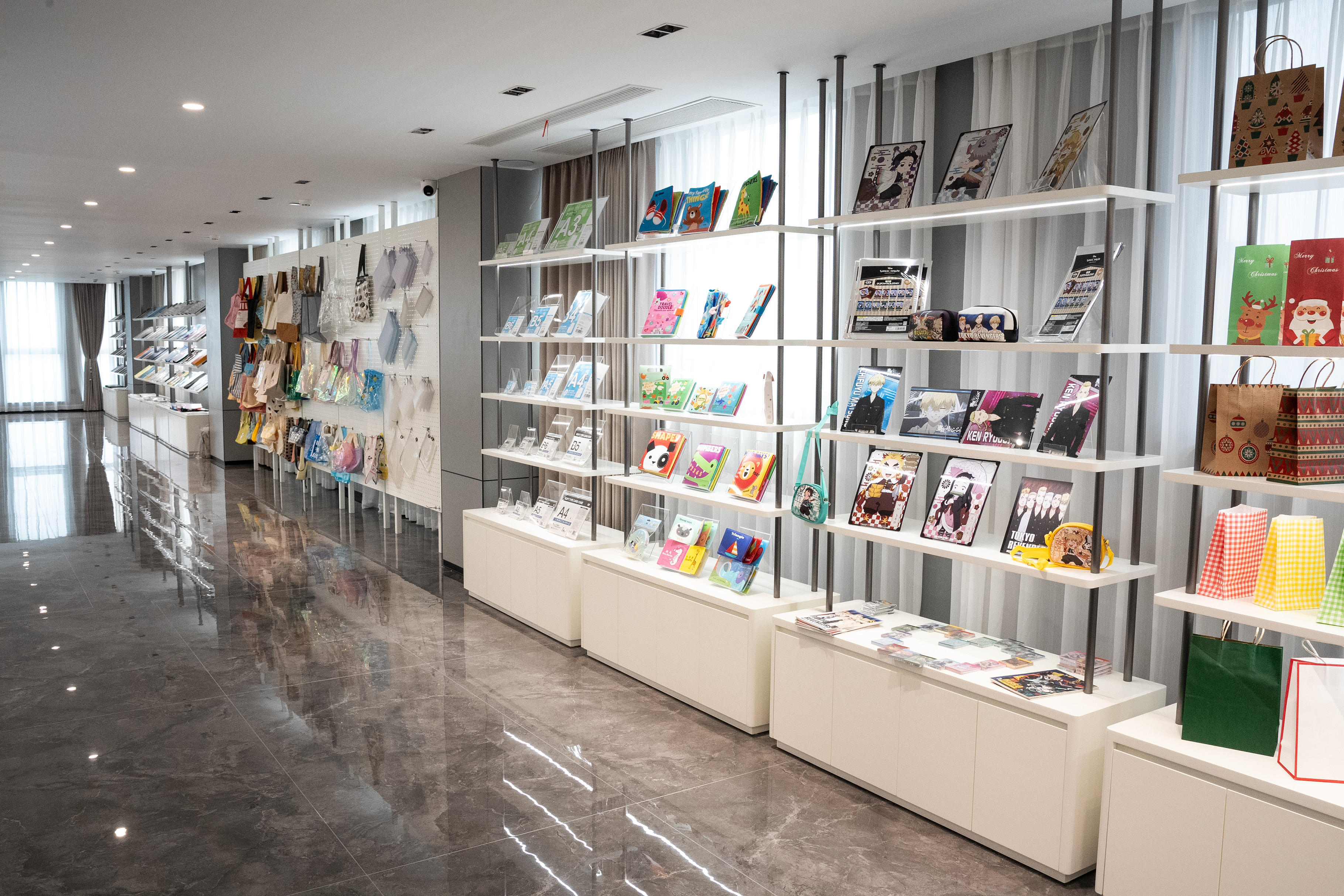
Sample room: where a specification becomes a signed reference sample.
Six clauses that make acceptance criteria testable
- Sampling plan and AQL. State the inspection standard, the AQL levels for critical, major and minor defects, the sample size and the acceptance/rejection numbers. AQL sampling is standard inspection practice; the specific levels are a commercial agreement, not an industry default, so they must be written down.
- Material inspection items. For PVC and TPU constructions, supplier-side quality guidance lists transparency, flexibility, odor, thickness, surface marks and heat-sealing performance as the checks to run. Put those items on the inspection sheet instead of the word "appearance".
- Leakproof construction, if claimed. Where a bag must be leakproof, supplier guidance recommends a TPU waterproof lining combined with needle-free stitching or high-frequency heat-sealing. Agree how that construction is verified — a recommendation is not a certified performance result.
- Logo, size and material control. These are the three customization axes on the OEM/ODM service. Specify the artwork file, the color reference, the placement tolerance and the size tolerance, and anchor them to a signed golden sample kept by both parties.
- Inspection logistics. Name who inspects, when in the production cycle, where, at whose cost, and what access the inspector has to work-in-progress.
- Non-conformance remedy. Define rework, replacement, rejection and who carries the cost of each, before the first cutting order is released.
How payment and delivery terms change your exposure
Payment structure determines how much leverage survives into inspection. A 30/70 split keeps the majority of value tied to shipment, which aligns with a pre-shipment acceptance test. A 50/50 split places half the value before inspection. A 100% payment before mass production removes the payment lever entirely, so if that structure is used, the acceptance clauses and inspection rights need to be unusually explicit, because the remedy has to work without financial holdback.
Delivery terms work the same way. DDP places the duty assumption inside the price, so the quotation should state the HS heading it assumes and the duty rate applied. FOB and EXW leave duty and freight with the buyer, which keeps the landed cost transparent but transfers the timing risk of customs clearance. Neither is better in general; each must match who is equipped to absorb the risk.
An eight-step verification sequence for a cosmetic bag order
- Lock the SKU sheet. Material, thickness, construction, zipper closure type, logo method, dimensions, packing and carton marks — one page, versioned.
- Request the capacity commitment in writing. Ask which basis (annual or monthly) applies and what share of the line is already booked in your window.
- Verify the four certificates. Holder, site, scope, market and validity, checked against your destination and shipment date.
- Convert acceptance into clauses. Sampling plan, defect classes, material inspection items, inspection access and remedy.
- Approve and sign a golden sample. One copy retained by the factory, one by the buyer, both referenced in the purchase order.
- Align payment milestones with verification events. Link the balance to pre-shipment acceptance, not only to a shipping date.
- Book the pre-shipment inspection early. Schedule it so that a failed result still leaves time for rework inside the delivery window.
- Confirm the after-sales route. After-sales support for the line is recorded as remote support, so agree the channel, the responsible contact and the evidence required for a claim.
Where this verification model applies
The same document trail works across the four situations that generate most cosmetic bag orders, but the emphasis shifts in each.
- Fixed-date promotional gift programs. The launch date is immovable, so capacity reservation and lead-time milestones carry the most weight; the 30–45 day lead time should be counted from sample approval, not from the order date.
- Retail private-label replenishment. Repeat cycles reward a locked golden sample and a stable inspection sheet, because the risk shifts from specification to consistency between batches.
- Licensed promotional programs. Where the artwork involves a licensed property, FAMA coverage and its recorded scope become a precondition rather than a supporting document.
- Distributor and wholesale stocking orders. With a 3,000-piece MOQ per SKU, a multi-SKU order multiplies the specification surface; the acceptance sheet has to travel with each SKU rather than with the order as a whole.
Claim, evidence, clause: a verification map
The table below converts common supplier statements into the evidence to request and the clause that gives the evidence effect. It is the working summary of this article.
| Supplier statement | Evidence to request | Clause to agree |
|---|---|---|
| 20,000,000 units annual output | Production schedule for your window; committed-load figure | Capacity reservation or pre-emption notice |
| BSCI and Sedex audited | Current audit documents; holder, site and validity | Social-compliance warranty with renewal notification |
| ISO 9001:2015 certified | Certificate showing scope over delivery processes | QMS certificate copy plus right to audit |
| Disney FAMA held | FAMA naming your licensed property and program | Authorization warranty before licensed production |
| Pre-shipment test | Inspection plan with AQL and defect classes | Acceptance clause with inspector access and remedy |
| 3,000-piece MOQ | Quotation by SKU and colorway | MOQ schedule with price breaks |
| 30–45 day lead time | Milestone plan from sample approval to handover | Dated milestones and delay-notification duty |
What a documented program record proves — and what it does not
One OEM/ODM program in the company's records is a Japanese chain-supermarket order for 1,000,000 units of daily shopping bags and promotional gifts on product line SB-2026-001, with a one-year reusable service life per unit. The recorded result is a 99.7% product qualification rate, zero delivery delay, repeat orders for three consecutive years, and printing matched to the retailer's branding with the client's eco-friendly requirement met.
Two cautions keep that record honest. First, the product is a shopping bag, not a cosmetic bag. What it evidences is how a high-volume, date-driven export program was run — scheduling, quality control and delivery discipline — not how a cosmetic bag SKU will behave. Second, a qualification rate is a program-level result measured against that customer's acceptance criteria; it does not transfer to a different specification, material or inspection level. The correct use of such a record is as a reason to ask for cosmetic bag references from the same product family and market you are buying for.
FAQ
Do BSCI, Sedex or ISO 9001 certificates confirm that a cosmetic bag order is compliant?
No. Each document answers a narrower question. BSCI (BSCI-2026-4567) and Sedex 4 Pillars SMETA (SEDEX-2026-0123) are social-compliance audits covering labour practices, health and safety, and environmental standards at the factory. ISO 9001:2015 (ISO-2026-7890) certifies a quality management system across product design, production, quality control and delivery processes. None of them certifies that a specific cosmetic bag meets the chemical, labelling or product-safety rules of your destination market. Request the current certificate copy, confirm that the holder and site address match the factory running your order, and pair the certificate with product-level test documentation agreed in the purchase order.
How can a buyer confirm that a supplier can produce a given cosmetic bag volume?
Compare your program size with the stated capacity basis and ask which basis applies. Hansun's records show annual output of 20,000,000 units, a monthly capacity of 1,500,000 units, a minimum order quantity of 3,000 pieces and a lead time of 30–45 days. The annual and monthly figures describe different things, so request a written production schedule for your delivery window, ask what share of the relevant line is already committed during that window, and attach the answer to a reservation or notification clause in the order.
What do delivery terms and import duty add to a cosmetic bag order?
Delivery terms decide where cost and risk transfer. Under FOB the buyer arranges and pays freight and insurance from the port; under EXW the buyer takes on everything from the factory gate; under DDP the seller delivers duty-paid, so the duty assumption sits inside the quoted price. Per Dutiable's 2026 tariff data, HS 4202.12.19 carries 20% duty into the United States and 3.7% into the EU and UK. Because classification depends on construction and outer material, a DDP quotation should state the HS heading it assumes; otherwise a reclassification changes landed cost after the price is fixed. The recorded minimum order quantity is 3,000 pieces, and the recorded payment structures are 30/70, 50/50 or 100% before mass production.
How should sampling and sample approval work before mass production?
Sampling is where customization is proven. Hansun provides OEM and ODM production services globally, with customization on logo, size and material, based on supplied drawings and samples. Request a signed golden sample that fixes material, thickness, color reference, logo placement and size tolerances, and keep one copy at the factory and one in your own archive. For PVC and TPU constructions, add the trade inspection items — transparency, flexibility, odor, thickness, surface marks and heat-sealing performance — to the sample approval sheet so the same list carries into pre-shipment inspection.
What lead time should be planned, and what can extend it?
The recorded lead time is 30–45 days. Plan from sample approval rather than from the purchase order date, because approval gates material ordering and cutting. Three items extend it: certificate renewal where a recorded validity end date falls before your shipment, so request the current copy at quotation stage; peak-season loading on shared capacity across the facility's product categories; and inspection scheduling if the pre-shipment test is booked late. Put milestone dates — specification lock, sample approval, cutting, packing, inspection and handover — into the order so a slip is visible before it becomes a missed launch.
How should acceptance criteria and after-sales support be agreed in writing?
The recorded basis is a pre-shipment test, supported by delivery terms FOB, DDP or EXW and payment structures of 30/70, 50/50 or 100% before mass production. Because "pre-shipment test" names a stage rather than a specification, write the sampling plan, AQL levels, defect classes, inspection timing, inspector access and non-conformance remedy into the purchase order. After-sales support is recorded as remote support, so agree the channel, the responsible contact and the evidence required to support a claim. Buyers who want to check these terms against their own specification can review the company brochure or send the SKU sheet for a written response.
Conclusion
Delivery assurance for a cosmetic bag order comes down to whether three documents survive a buyer's own review. The capacity record — 25,000 m², approximately 200 employees, 25 R&D engineers, 20,000,000 units of annual output, a monthly capacity of 1,500,000 units and roughly 70% export share — answers whether the factory can produce at scale, once it is tied to a named delivery window. The four certificates answer which compliance question is actually covered, once holder, site, scope, market and validity are checked together. The purchase terms — 3,000-piece MOQ, FOB, DDP or EXW, pre-shipment test, and 30/70, 50/50 or 100% before production — answer what happens if the shipment does not meet the specification, once the test is written as a clause.
Hansun's published capability and certificate data are available for that review, and the brochure and SKU-level quotation provide the next documents in the sequence.
Company information: Zhejiang Hansun Arts & Crafts Co., Ltd. — brochure download: company brochure (PDF).

Order documents, purchase terms and inspection records: the practical next step after verification.
Have Questions or Need More Details?
Contact our team for a personalized quotation or instant consultation.
Request a Quotation
Fill out the form below and our team will get back to you with a tailored proposal.
WhatsApp Direct Chat
Prefer to chat in real-time? Message us on WhatsApp for instant assistance & quick answers.
- Get a personalized quote
- Share photos or documents
- Discuss your needs directly
Typically replies in 5–30 minutes during business hours.