
Factory vs. Trading Intermediary: Shopping Bag Decision

For bulk buyers of custom shopping bags, the useful question is not whether an in-house factory is always better than a trading intermediary. The useful question is which model gives you verifiable control over four points: who actually holds the certificate, whether the production site can be audited, whether material compliance can be tied to the order, and whether accessory integration is managed in one quality plan. A supplier that cannot produce evidence for those points is a risk in either model.
This head-to-head decision guide compares the two sourcing routes using those four checkable criteria. It also shows what to request from either route so that a wholesale shopping bag program, supermarket shopping bag range, or gift shopping bag launch can be evaluated on the same evidence. Zhejiang Hansun Arts & Crafts Co., Ltd. (Hansun) is a Wenzhou-based manufacturer of tote and PVC bags founded in 1996; its company profile lists a 25,000 m² factory, about 200 employees, and 25 R&D engineers. It appears here as an in-house factory example where the facts support that role; the article does not declare a brand winner without order-level documents.
The decision in one paragraph
Choose an in-house factory when your program needs direct audit access, a certificate holder whose address matches the production site, controlled material and print trials, and accessory assembly under one quality plan. Choose a trading intermediary when it provides consolidated sourcing across multiple bag types, clearly discloses the production sites, and documents quality control at those sites. In both cases, the decision should rest on the documents you can verify, not on the label on the sales office. A trading intermediary can be valid for a multi-purpose shopping bag range if it names the factory and supplies the same evidence; a factory can be valid for a custom printed shopping bag program only if its site and scope match your order.
Problem definition: why the factory-versus-intermediary question is really a proof question
The factory-versus-intermediary question is a proof question because two suppliers can show similar catalogs, similar bag photos, and similar sales language while offering very different levels of traceability. In an in-house factory model, the production site, quality team, and material storage may sit within one management system. In a trading intermediary model, the sales company may coordinate one or more factories, accessory vendors, and finishing partners. Neither structure is automatically stronger; the buyer needs to know where the actual work happens and who owns the evidence.
The common failure is not the model itself. It is a mismatch between the sales claim and the production evidence. The sample may come from one site while bulk production goes to another. The certificate may be held by the trading company rather than the factory. The material declaration may cover a generic grade rather than the lot used for your order. Hang tags, webbing, or brand stickers may be sourced by a third party outside the quality plan. These are the points that change the risk profile of a wholesale shopping bag order.
- A certificate on a brochure is not the same as a certificate whose holder and scope cover your production site.
- An audit of a sales office is not the same as an audit of the sewing, printing, and packing lines.
- A material claim is not the same as a lot-level declaration or test report for the exact PVC or fabric grade.
- Accessory coordination is not the same as accessory integration under one inspection plan.
Industry background: compliance and reuse raise the evidence bar
Demand for reusable and eco-friendly shopping bags continues to attract buyers, but market growth does not prove any individual supplier's capability. Fortune Business Insights projects the global reusable shopping bag market to grow from USD 16.67 billion in 2026 to USD 28.87 billion by 2034. That forecast is useful for category planning; it is not evidence that a specific factory can meet your material, audit, or delivery requirements.
Regulatory pressure is a more direct procurement issue. According to EU sources, Regulation (EU) 2025/40 requires economic operators making reusable packaging available in a Member State to ensure a reuse system with collection incentives. EU interpretive material also describes reusable packaging as designed for multiple rotations, capable of being emptied, cleaned, washed, or repaired, and subject to safety, hygiene, and recyclability requirements. For a reusable shopping bag, waterproof shopping bag, or heavy duty shopping bag program, those expectations turn material choice and durability into documents to verify.
The practical result is that buyers now ask for more than a product photo. A supermarket shopping bag program may need evidence of consistent print quality, load performance, and material control. A gift shopping bag program may need scratch resistance and wear-resistant logo printing. A promotional shopping bag campaign may need a fast sample and repeatable color matching. The sourcing model matters because it determines how directly those claims can be traced.
The four-criteria comparison
The comparison below is a buyer-side evidence map, not a claim that every factory or every intermediary behaves the same way. Use it to ask the same questions of both models and to see which answers are supported by documents.
| Check | In-house factory model | Trading intermediary model | Evidence to request |
|---|---|---|---|
| Certificate ownership | The certificate holder and site address can be matched to the production site; the scope should cover the work you are buying, such as design through delivery if ISO 9001:2015 is required. | The intermediary may coordinate factory certificates or hold commercial documents; the actual production site must be disclosed and matched to the certificate. | Certificate number, issuing body, expiry date, holder name, site address, scope, and the latest audit report. |
| Audit access | A site audit can include production lines, material storage, quality control, sampling, and packaging. | An audit may take place at an office or at a disclosed factory; confirm which site is audited and who controls corrective actions. | Audit agenda, site access rules, audit date, photos or records, and corrective-action log. |
| Material compliance | Material declarations and test reports can be tied to incoming lots, print processes, and finished bags. | Factory-level reports must be matched to the actual source; ask how lots are traced when more than one factory is involved. | REACH statement for EU-bound goods, food-contact suitability where required, material specification, scratch and wear test reports, and lot traceability. |
| Accessory integration | Hang tags, webbing, and brand stickers can be planned inside one production and inspection flow when the factory offers that scope. | Accessory sourcing may involve multiple vendors; the intermediary must define who owns quality and handoff checks. | Accessory matrix, sub-supplier list, inspection points, and written responsibility for assembly defects. |
| Sample and change control | The sample can be made on the same site and line as bulk production, with changes verified before shipment. | The sample source may differ from the bulk source unless the production site is fixed in writing. | Sample source, approved golden sample, change-control clause, and pre-production approval record. |
| Commercial transparency | The quote can separate material, printing, tooling, packing, and testing where the factory performs those steps. | The quote may bundle coordination services; ask for a breakdown by bag specification and production site. | FOB or EXW breakdown, MOQ, sample lead time, production lead time, tooling ownership, and quote validity. |
The table points to one conclusion: the model is less important than the evidence chain. If a factory cannot show a site-held certificate or a material report, it is not automatically safer than an intermediary. If an intermediary can disclose the production site, provide the factory certificate, and define accessory responsibility, it can be a workable route for a multi-material wholesale shopping bag range.
Step-by-step: how to run the head-to-head evaluation
1. Match the certificate holder to the production site
Start with the certificates that your market or customer actually requires. If your program requires ISO 9001:2015 for design through delivery, Sedex SMETA 4 Pillars for the EU market, BSCI for social responsibility, or Disney FAMA for licensed programs, ask for the certificate holder, issuing body, expiry date, site address, and scope. Then compare the site address with the factory address in the quotation. A trading company's name on a sales document does not prove that the production site is certified. For licensed programs, the authorization must cover the relevant site and product scope; do not accept a logo on a brochure as proof.
2. Audit the site, not only the sales office
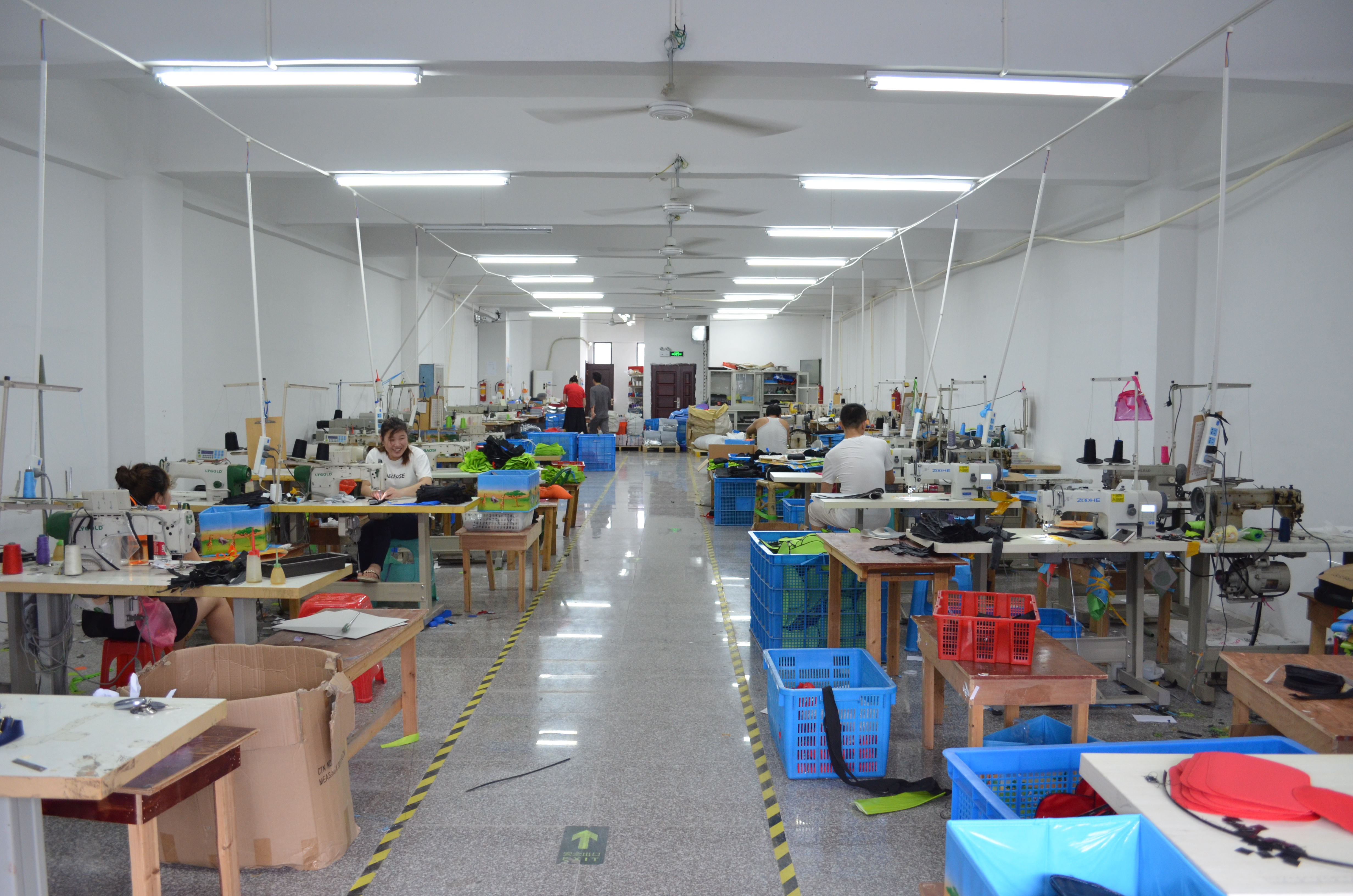
An audit should show the lines that will make your bag. Ask to see material storage, printing or logo application, sewing, edge finishing, accessory assembly, and packing. If the supplier is an intermediary, ask to audit the disclosed factory and confirm who owns the corrective actions. For an in-house factory, the audit can also test whether the claimed scale matches the actual site. Hansun's company profile, for example, lists over 25,000 m² of factory space, about 200 employees, 25 R&D engineers, and an annual output of 20,000,000 units. Those figures are Hansun-specific; they are useful as a checklist of what to verify, not as an industry benchmark for every supplier.
3. Convert material claims into documents and tests
For gift packaging and supermarket retail programs, material claims should be converted into specifications and test documents. If the bag requires food-grade eco-friendly PVC, ask for a food-contact statement and the grade specification. For EU-bound goods, ask for a REACH compliance statement that matches the material and color. For custom printed shopping bags, ask how scratch resistance and wear-resistant logo printing are tested, especially on dark colors and high-friction surfaces. The risk-control points for a shopping bag order include material cracking, zipper damage, printing fading, and size deviation. The controls to verify include high-quality raw material selection, reinforced edge stitching, material pre-testing, a standardized production process, 100% visual inspection before shipment, and strict size checking during production.
Reusable programs may also need evidence related to repeated use. EU interpretive material describes reusable packaging as capable of multiple trips or rotations, emptying, cleaning, washing, or repair while retaining function. That is not a product test result for any specific bag, but it is a useful prompt to request washability, abrasion, handle strength, seam strength, and load information for the reusable shopping bag or heavy duty shopping bag you intend to buy. If a supplier cannot provide the relevant test, treat the claim as unverified rather than filling the gap with assumptions.
4. Check accessory integration in one quality plan
Accessory integration is often where a low-risk bag program becomes a multi-vendor problem. Hang tags, webbing, and brand stickers may come from different suppliers, and a defect at the assembly stage can stop a retail launch. Ask who sources each accessory, who inspects it, who owns the defect, and where the handoff is recorded. An in-house factory may be able to manage these items in one production flow, but confirm that for your exact order. A trading intermediary may coordinate them well, provided it gives you the accessory matrix and inspection plan. For a gift shopping bag or promotional shopping bag with printed tags and branded webbing, this check is as important as the bag material itself.
5. Compare commercial terms like for like
A factory-versus-intermediary comparison is not complete without a like-for-like quote. Ask both models to quote the same bag specification: material, thickness or GSM, dimensions, print method, color count, accessory set, packing, and Incoterms. Separate tooling, sample cost, and testing cost from the unit price. Hansun's supplied comparison data reports a 3-5 day sample turnaround, a 99.8% on-time delivery rate, and 10-15% lower unit cost for bulk orders; these are company-reported figures and should be verified in the RFQ for your specification. A trading intermediary may include coordination services in its price, so the comparison should show what is performed in-house and what is outsourced.
Use cases: where each criterion changes the choice
Supermarket retail and high-frequency programs
A supermarket shopping bag program usually needs repeatable quality across large volumes, consistent print, and a bag that can handle frequent use. Large capacity shopping bag designs, heavy duty shopping bag constructions, and waterproof shopping bag materials may all appear in one retail range. Direct audit access and a site-held quality certificate can reduce the risk of a mid-program change in production source. If an intermediary is used, the buyer should still see the factory audit and the production site for each bag type.
Gift packaging and promotional programs
A gift shopping bag or promotional shopping bag often carries brand presentation risk. Scratch resistance, wear-resistant logo printing, clean accessory attachment, and color consistency matter more than raw volume alone. An accessory-heavy gift bag may benefit from one quality plan for hang tags, webbing, and brand stickers. If the intermediary coordinates multiple accessory vendors, the buyer needs a single owner for final inspection and a clear approval process for the golden sample.
Travel, corporate, and wholesale ranges
A travel shopping bag, foldable shopping bag, lightweight shopping bag, portable shopping bag, or shopping tote bag may require a different material and construction from a supermarket carrier. A wholesale shopping bag range that spans PVC shopping bag, eco-friendly shopping bag, and custom printed shopping bag lines may be easier to consolidate through an intermediary. That convenience is valid only if each production site is disclosed and the material compliance documents match the bag being supplied. Multi-purpose shopping bag ranges should be checked bag by bag, not as one generic category.
Where Hansun fits the in-house factory side
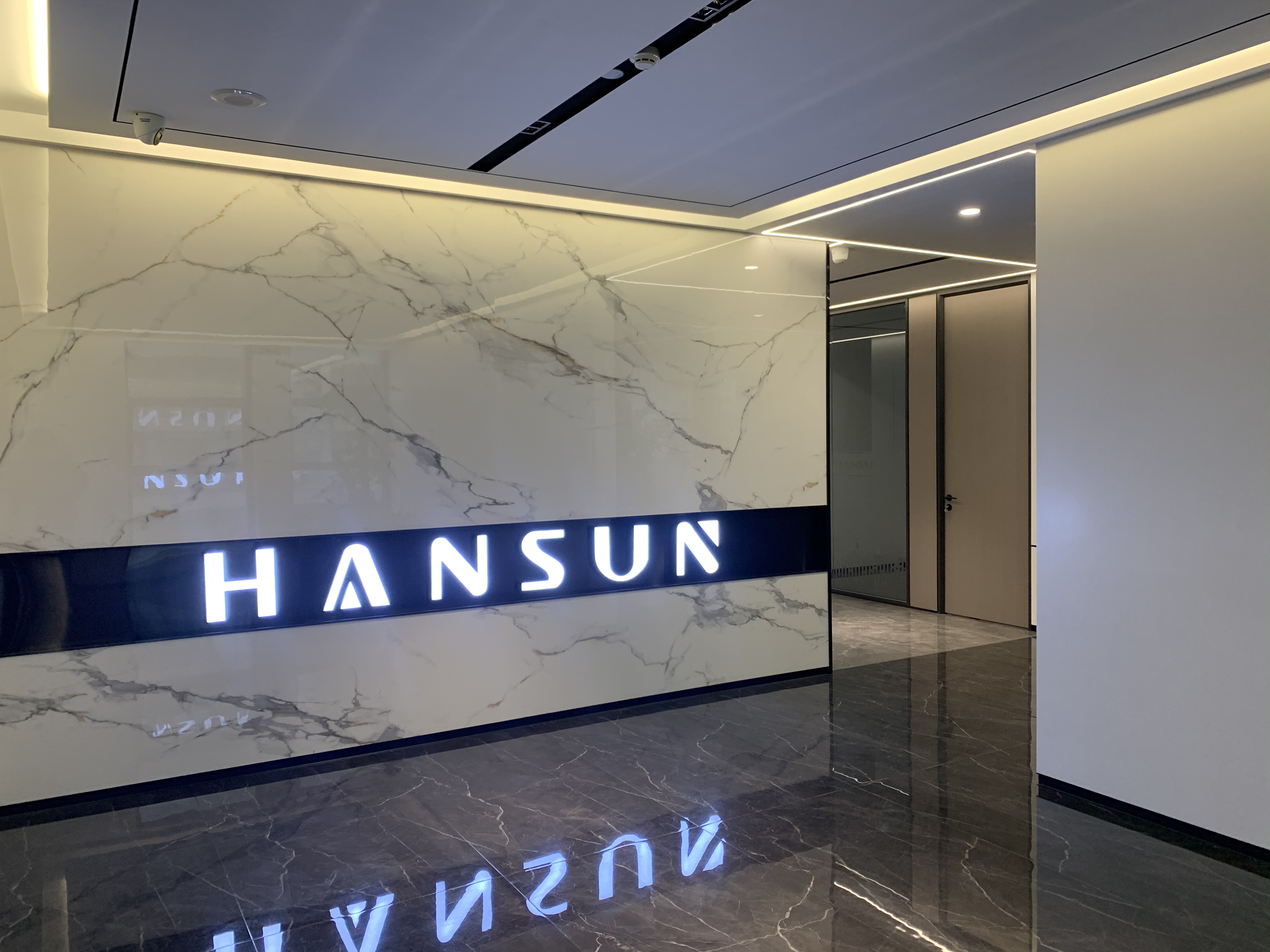
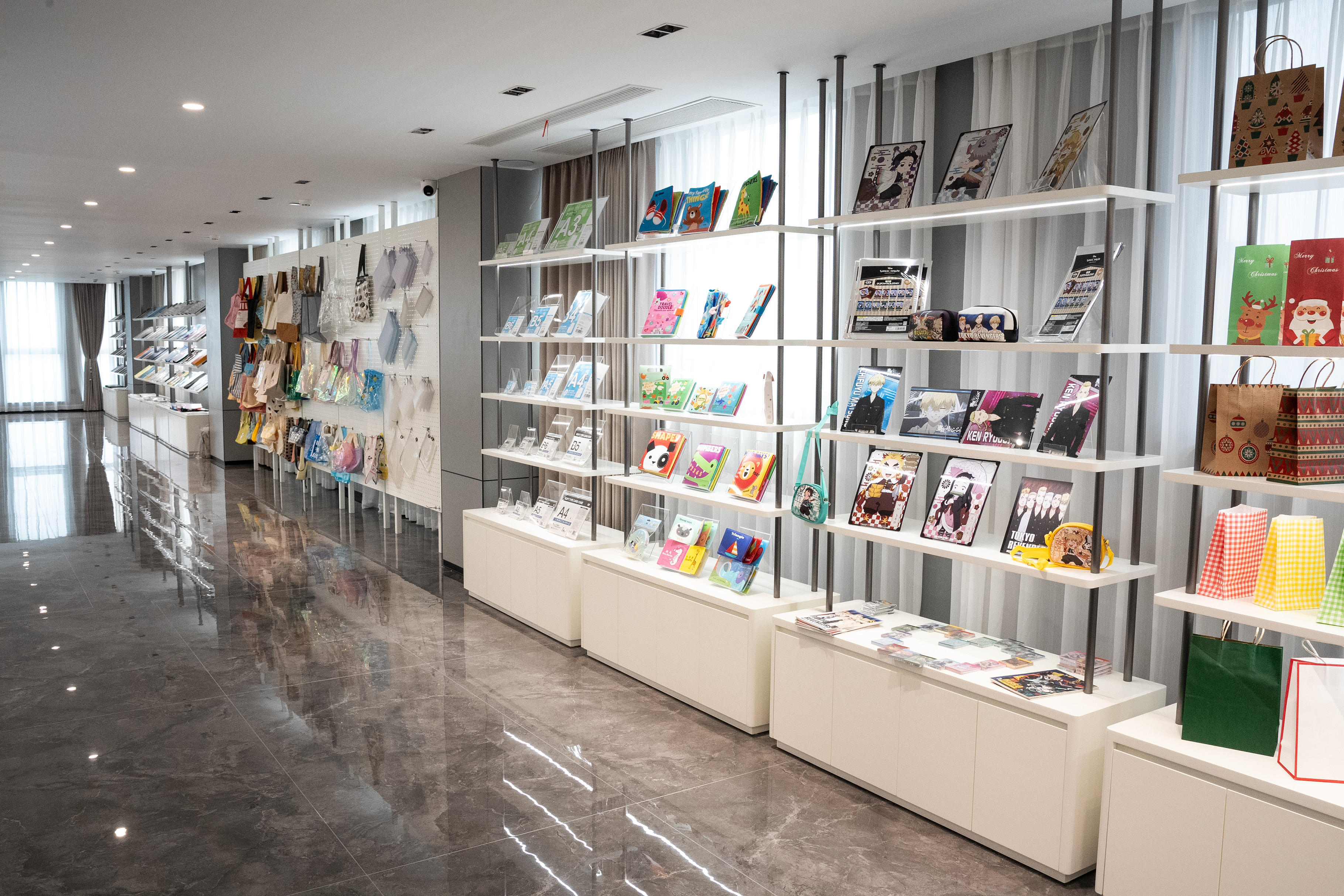
Zhejiang Hansun Arts & Crafts Co., Ltd. is an in-house manufacturer profile in this comparison. The company was founded in 1996, lists a 25,000 m² factory, about 200 employees, 25 R&D engineers, and an annual output of 20,000,000 units. Its main products are tote bags and PVC bags, and its profile lists a 70% export ratio. Those facts support a factory-side evaluation for custom shopping bag programs, including OEM shopping bag work where the specification matches the company's product scope.
They do not, by themselves, prove that every certificate, food-grade material claim, or accessory integration applies to your order. The buyer should still ask Hansun and any other supplier for the same four evidence sets: certificate holder and scope, site audit access, material compliance documents for the exact grade, and the accessory matrix for hang tags, webbing, and brand stickers. A factory profile is a starting point for verification, not a substitute for it.

Decision matrix: choose the model that clears your evidence threshold
Use this matrix to move from general preference to a defensible decision. It does not rank brands; it maps the buyer's priority to the model that is more likely to provide the needed evidence, and it shows what still needs verification.
| If your priority is | Lean toward | Because | Still verify |
|---|---|---|---|
| A licensed gift or character program requiring Disney FAMA | Production site that can show authorization for the relevant site and product scope | Licensed programs depend on site-level authorization, not only sales permission | Site address, product scope, expiry, and authorization holder |
| EU market access with REACH and reusable packaging obligations | Supplier that can provide material declarations and lot traceability | Material compliance and reuse claims need documents that match the exact bag | REACH statement, material grade, test reports, and reuse-system role |
| Supermarket retail with high-frequency use | Factory with direct audit access and consistent quality control | Repeat programs place a premium on production control and inspection records | Capacity, inspection plan, size checking, and packing control |
| A multi-material wholesale range | Trading intermediary with disclosed production sites | Consolidation can reduce coordination work across PVC, tote, and promotional bags | Factory certificate for each site and a clear quality owner |
| An accessory-heavy gift bag | Factory with accessory integration or intermediary with a documented accessory QC plan | Hang tags, webbing, and brand stickers create handoff risk | Accessory matrix, inspection points, and defect responsibility |
| A first custom printed order with new artwork | Either model, provided the sample source is fixed | Print approval and golden-sample control matter more than the label on the sales office | Sample line, color proof, scratch and wear checks, and change control |
Information to request from either model
A clean comparison starts with an identical document request. Ask both the in-house factory and the trading intermediary for the same package, and score the answers against your program:
- Company registration, factory address, and the name of the actual production site for your order.
- Certificate package for ISO 9001:2015, Sedex SMETA 4 Pillars, BSCI, and Disney FAMA where relevant, including holder, scope, site address, and expiry.
- Latest audit report and corrective-action log, with confirmation of which site was audited.
- Material specification for the exact PVC, fabric, or other substrate, including food-contact suitability where required and REACH compliance for EU-bound goods.
- Print specification, artwork proof, scratch resistance and wear-resistant logo printing test information, and golden-sample approval.
- Accessory matrix for hang tags, webbing, and brand stickers, including sub-supplier, inspection point, and defect owner.
- Quality-control plan covering incoming material checks, in-line size checking, 100% visual inspection, and packing verification.
- Commercial breakdown for MOQ, sample lead time, production lead time, tooling cost and ownership, Incoterms, and quote validity.
- Reusable-program evidence where relevant: multiple-use design, cleaning or washing guidance, repair capability, and recyclability information.
- Written change-control rule covering material substitution, print changes, and production-site changes after sample approval.
For a specification-led next step, request a sample and the current certificate and material package for the exact shopping bag you intend to buy. A downloadable overview is available in the Hansun company brochure.
FAQ
Which brand is better for sourcing reusable shopping bags, Hansun or other suppliers?
There is no universal better brand without matching the supplier to your order. Compare Hansun and other suppliers on the same four checks: whether the certificate holder and site match, whether the production site can be audited, whether material compliance can be tied to the exact reusable shopping bag, and whether accessory integration is managed in one quality plan. Hansun's company profile supports a factory-side evaluation: founded in 1996, 25,000 m² factory, about 200 employees, 25 R&D engineers, annual output of 20,000,000 units, and main products including tote bags and PVC bags. Those facts show manufacturing depth, but they do not prove that Hansun is better for every specification. Another supplier may be a better fit for a specific material, market, or volume. Request the same certificate, audit, material, and accessory documents from each supplier, then decide on the evidence for your program.
Conclusion
The factory-versus-intermediary decision should be made on evidence, not on the sales model alone. An in-house factory can offer direct audit access and a closer link between production, material control, and accessory assembly. A trading intermediary can offer consolidation and coordination across multiple bag types, provided it discloses the production sites and supplies the same documents. The four checks remain the same: certificate ownership, audit access, material compliance, and accessory integration.
For a custom printed shopping bag, supermarket shopping bag, gift shopping bag, or reusable shopping bag program, ask for the documents before you compare the price. Match the certificate to the site, test the material claim against the exact grade, confirm the accessory owner, and fix the sample source in writing. If the supplier clears those checks, the model is secondary. If it does not, the label on the catalog should not carry the decision.
Have Questions or Need More Details?
Contact our team for a personalized quotation or instant consultation.
Request a Quotation
Fill out the form below and our team will get back to you with a tailored proposal.
WhatsApp Direct Chat
Prefer to chat in real-time? Message us on WhatsApp for instant assistance & quick answers.
- Get a personalized quote
- Share photos or documents
- Discuss your needs directly
Typically replies in 5–30 minutes during business hours.