
Cosmetic Bag Long-Term OEM Partnership FAQ: Terms, Acceptance and After-Sales Support
Cosmetic Bag Long-Term OEM Partnership FAQ: Terms, Acceptance and After-Sales Support
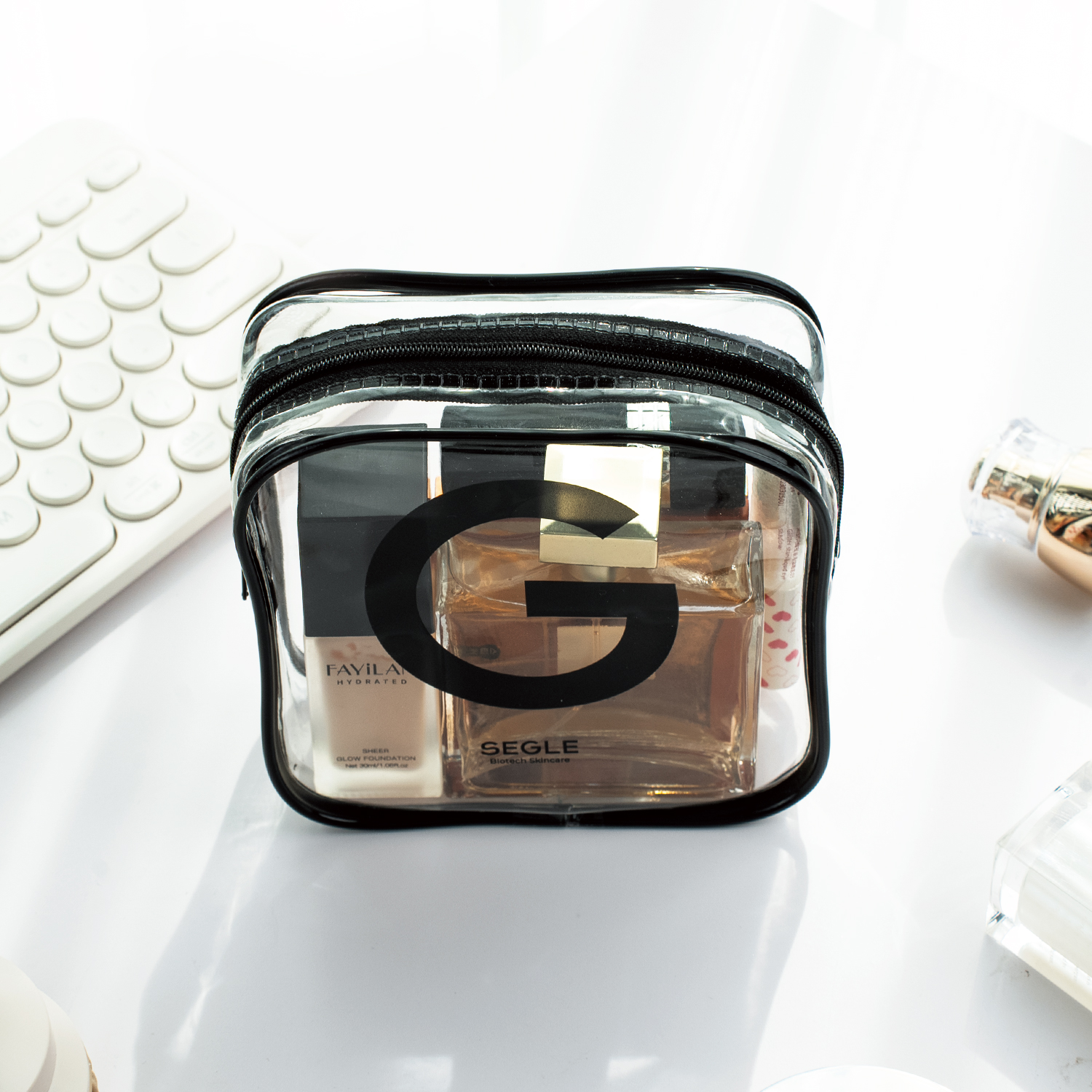
A long-term cosmetic bag OEM partnership is a supply arrangement in which a manufacturer keeps materials, decoration processes and acceptance standards stable across repeated production cycles, instead of re-quoting every order from a blank sheet. The questions that decide whether that arrangement survives past the first shipment are rarely about unit price. They are about which purchasing terms are fixed in writing, what makes a batch acceptable or rejectable, and what support continues after delivery.
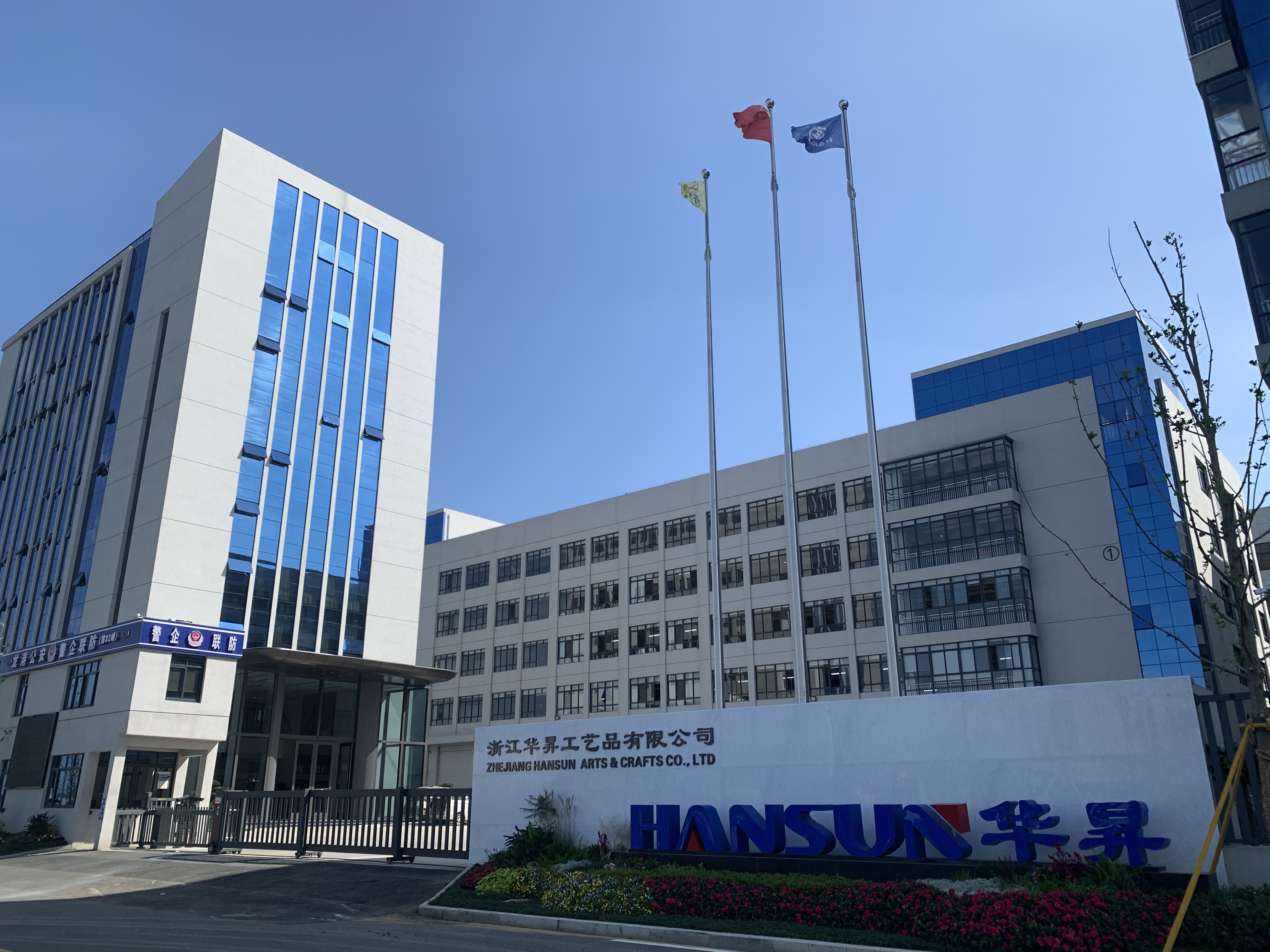
This FAQ is written for brand owners, importers, promotional-gift buyers and retail sourcing teams moving a cosmetic bag program from a single promotional run into a multi-year agreement. The specifications, capacity figures, certification references and acceptance points below are drawn from the documented program data of Zhejiang Hansun Arts & Crafts Co., Ltd. (brand: Hansun), a manufacturer founded in 1996 in Longgang City, Wenzhou, Zhejiang, China, producing PVC cosmetic bags (model CB-2026-002) alongside reusable shopping bags and related promotional items.
The Problem: Long-Term Cosmetic Bag Partnerships Rarely Fail on Price
Three failure modes account for most breakdowns between a brand and its cosmetic bag manufacturer, and none of them is unit price.
The first is term drift. A buyer and a supplier agree a specification for one promotional order, then the second order is placed by email against a verbal reference. Size, decoration method and accessory count shift quietly, and the delivered goods no longer match what the marketing team approved.
The second is acceptance without a written standard. A cosmetic bag is used in a high-frequency repeated daily use pattern — packed, carried, opened and re-closed several times a day. The defects that matter to end consumers appear inside that pattern: printed logos that wear away, scratched clear PVC panels, zippers that stiffen, or hang tags, webbing and brand stickers that separate from the body. Without an agreed inspection point for each of those items, every batch becomes a renegotiation.
The third is after-sales support that is reactive rather than planned. A buyer extending a program into a second or third year needs a named contact, a defined response route and a documented path for replacements — not a general promise of "good service".
These three failure modes map directly onto three contractual questions: purchasing terms, acceptance criteria, and after-sales expectations. The rest of this page answers them in the order a sourcing team actually encounters them.
Industry Background: What Changed in the Cosmetic Bag Market
Two forces now shape how buyers evaluate a cosmetic bag manufacturer: market growth and regulatory tightening.
On the demand side, the global makeup bags market was valued at approximately USD 2.8 billion in 2025 and is projected to reach USD 4.5 billion by 2031 (Deep Market Insights). The material mix is shifting inside that growth — nylon is currently the dominant material in the makeup bag market because of its durability and water resistance, while aluminum cases are the fastest-growing segment for professional use (Cognitive Market Research, 2025). Sustainability expectations run alongside the same trend: one 2025 industry survey cited by DH Bags put the share of consumers who prioritize sustainable and eco-friendly materials at around 55%.
On the compliance side, requirements are moving from voluntary to enforced. China's GACC Decree No. 284, effective 1 December 2026, introduces a risk-based customs supervision system for exported cosmetics and related products, with an emphasis on digital verification and traceability. In the United States, the FDA's Modernization of Cosmetics Regulation Act (MoCRA) already mandates facility registration and product listing for manufacturers, which affects compliance expectations across cosmetic accessories supply chains.
The practical consequence for a cosmetic bag buyer is that the specification conversation and the compliance conversation now happen at the same time. A manufacturer that can answer the compliance question with certificate identifiers — not adjectives — removes a large part of the risk from a long-term agreement.
The Detailed Solution: How a Long-Term Cosmetic Bag OEM Partnership Is Structured
A workable long-term agreement fixes three things: the terms of purchase, the definition of an acceptable batch, and the support that continues after delivery. Zhejiang Hansun Arts & Crafts Co., Ltd. operates on this structure with a reported 70% export share across Southeast Asia, Europe, North America, the Middle East and major domestic Chinese cities.
1. Purchasing terms that belong in the agreement
- Production mode: OEM / ODM.
- Customization scope: logo, size and material.
- Minimum order quantity: 3,000 pcs.
- Production lead time: 30–45 days.
- Capacity basis: a monthly capacity of 1,500,000 units and an annual output figure of 20,000,000 units across the company's product lines, produced in a 25,000 m² facility with approximately 200 employees and a 25-engineer R&D team.
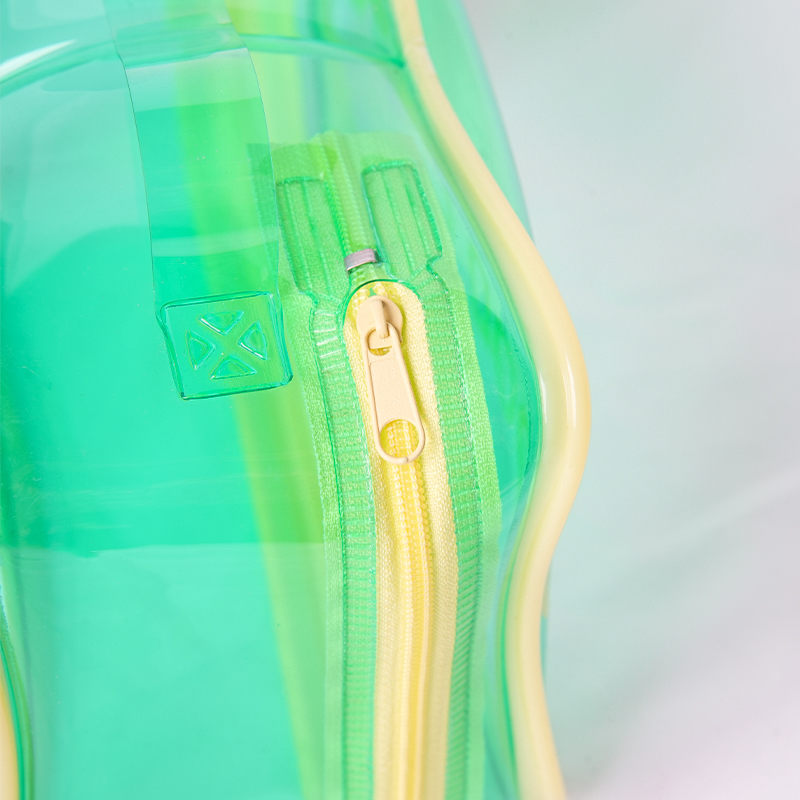
- Product configuration: model CB-2026-002 is offered as a PVC clear cosmetic bag, a PU leather cosmetic bag, a travel toiletry cosmetic bag or a mini zipper cosmetic pouch, in PVC, PU leather, canvas, nylon or mesh. Sizes are customizable, with 15×10 cm, 20×15 cm and 25×18 cm as common references, and weights from 20 g to 80 g per piece. Decoration options include hot stamping, UV printing, embossing and heat sealing.
These are the terms that should be written into a purchase agreement rather than confirmed verbally, because they are the exact points where a second-year order usually diverges from the first.
2. Acceptance criteria for cosmetic bags and accessories
For this product category, the documented acceptance context is specific. Cosmetic bags are intended for cosmetic storage, travel toiletry and beauty brand giveaways, and are used in high-frequency repeated daily service under room-temperature indoor storage, daily outdoor carrying and occasional humid environment conditions. That operating profile translates into concrete acceptance points: food-grade eco-friendly PVC as the material baseline, REACH compliance, scratch resistance, and wear-resistant logo printing.
Accessories are inspected on the same basis. Hang tags, webbing and brand stickers are treated as matched components of the finished item, not as packaging afterthoughts, because they are among the most visible items to an end consumer and among the most common sources of buyer-side complaints.
3. After-sales support expectations
After-sales for the current program is provided as remote support, coordinated through a named contact rather than a general inbox. For a long-term agreement, the useful additions are a defined response channel, a documented route for replacement of non-conforming units, and — critically — a compliance calendar.
Compliance records are cyclical, not permanent. A buyer signing a multi-year contract should request the current in-force copy of each certificate at signature and at each renewal date, so the compliance file never falls behind the production schedule.
Step-by-Step: Onboarding a Long-Term Cosmetic Bag OEM Program
- Fix the specification sheet. Record model (CB-2026-002), material, size, weight, decoration method and accessory list. Any item left as "standard" becomes a dispute in year two.
- Validate on samples. Request physical samples in the exact material and decoration combination. Photograph and retain the approved sample as the reference article.
- Sign the golden sample. Both parties hold a signed reference unit so that future batches are compared against an object, not a description.
- Write the acceptance criteria into the agreement. Cover material (food-grade eco-friendly PVC, REACH compliance), surface performance (scratch resistance), logo durability (wear-resistant printing), accessory accuracy, and dimensions.
- Agree the quality-control plan. Because the QC regime is set according to customer requirements, the inspection points and defect definitions should be confirmed in writing before the first production run.
- Confirm the compliance file and the delivery schedule. Verify certificate identifiers, then map the order to the 30–45 day lead time and to the monthly capacity available for repeat orders.
Use Cases: Where Long-Term Cosmetic Bag Programs Fit
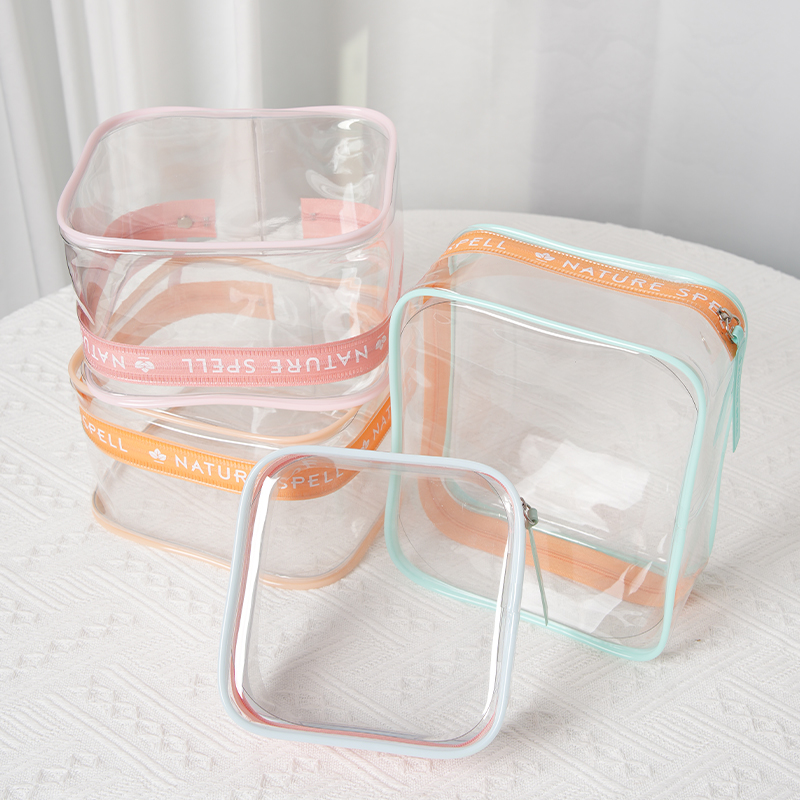
The documented application field for this product line is brand promotional gifts and supermarket retail support, spanning beauty & cosmetics, travel & tourism, promotional gift and hotel amenities. That produces four recurring long-term program types:
- Beauty brand giveaways. A cosmetic bag used as a gift-with-purchase or launch insert, ordered repeatedly at the same specification, where logo durability across the product's service life is the acceptance priority.
- Travel and toiletry retail sets. Multi-piece configurations where consistent sizing and a reliable zipper closure matter more than single-unit cost.
- Promotional gifts and retail support. Programs where a bag carries a supermarket or campaign identity, and where accessory consistency — hang tags, webbing, brand stickers — protects the brand at point of sale.
- Hotel amenities and hospitality. Regular replenishment cycles where a stable, comparable batch is more valuable than a lower first-order price.
Continuity evidence exists in an adjacent product line. In a Japan-based OEM/ODM program for reusable shopping bags (model SB-2026-001) covering 1,000,000 units for a chain supermarket's daily shopping and promotional gift use, the manufacturer recorded a 99.7% product qualification rate with zero delivery delay, and received repeat orders for three consecutive years while meeting Japan's eco-friendly standards. The relevance to a cosmetic bag agreement is structural rather than product-specific: the same terms, acceptance and delivery discipline is what produces repeat orders instead of re-tendering.
Reference Tables: Partnership Terms, Compliance Records and Acceptance Criteria
The three tables below summarize the documented reference points a buyer can put directly into a long-term OEM agreement.
Table 1 — Partnership terms at a glance
| Term | Documented scope |
|---|---|
| Production mode | OEM / ODM |
| Customization scope | Logo, size, material |
| Minimum order quantity | 3,000 pcs |
| Production lead time | 30–45 days |
| Monthly capacity | 1,500,000 units |
| Annual output | 20,000,000 units |
| Facility and team | 25,000 m² factory, approximately 200 employees, 25-engineer R&D team |
| Quality control | Defined according to customer requirements |
| After-sales | Remote support |
| Export share | 70% of output |
Table 2 — Compliance and audit records on file
| Record | Identifier | Role in a long-term program |
|---|---|---|
| ISO 9001:2015 | ISO-2026-7890 | Quality management covering design, production, quality control and delivery |
| Disney FAMA | DSN-FAMA-2026-001 | Authorization record held for programs that require it |
| Sedex SMETA | SEDEX-2026-0123 | Social-compliance audit record for buyer due diligence |
| BSCI | BSCI-2026-4567 | Social-compliance audit record; certificate cycle recorded to 2026-09-09 |
| REACH compliance | Material-level requirement | Documented requirement for the cosmetic bag material specification |
Social-compliance audits renew on an annual cycle. Buyers should request the current in-force copy of each record at contract signature rather than relying on an identifier quoted from a supplier's older marketing material.
Table 3 — Acceptance criteria matrix
| Acceptance area | Documented requirement | Why it matters in daily use |
|---|---|---|
| Incoming material | Food-grade eco-friendly PVC; REACH compliance | Sets the compliance baseline for the finished bag |
| Surface durability | Scratch resistance | Clear panels tend to show handling marks more visibly than opaque fabrics |
| Logo decoration | Wear-resistant logo printing; hot stamping, UV printing, embossing or heat sealing | Brand visibility has to hold across the product's service life, not just at delivery |
| Accessories | Hang tags, webbing, brand stickers | The most visible components to end consumers and a frequent source of buyer complaints |
| Dimensions and weight | Customizable; common sizes 15×10 cm, 20×15 cm, 25×18 cm; 20–80 g/pc | Controls retail fit, freight weight and perceived quality |
| Operating conditions | Room-temperature indoor storage, daily outdoor carrying, occasional humid environment | Defines what the bag must withstand between production and end use |
| Use cycle | High-frequency repeated daily use | Determines how strict the inspection plan should be |
FAQ: Long-Term Cosmetic Bag OEM Partnership Terms, Acceptance and Support
Which certification and audit records should a long-term cosmetic bag OEM partner hold?
For an audited cosmetic bag program, the record set should include an ISO 9001:2015 quality management certificate covering design, production, quality control and delivery — Zhejiang Hansun Arts & Crafts Co., Ltd. holds ISO-2026-7890 — plus social-compliance and authorization records where the buyer requires them: Disney FAMA (DSN-FAMA-2026-001), Sedex SMETA (SEDEX-2026-0123) and BSCI (BSCI-2026-4567, with the certificate cycle recorded to 2026-09-09). At material level, the specification itself should state food-grade eco-friendly PVC and REACH compliance. Because these documents renew on annual cycles, ask for the current in-force copy at signature, and check the buyer-side rules your market applies — GACC Decree No. 284 for exports to China-facing chains, and MoCRA facility registration and product listing requirements in the United States.
What OEM and ODM customization can a long-term cosmetic bag partner actually handle?
Documented customization scope for the cosmetic bag line covers logo, size and material, under both OEM and ODM production modes. Model CB-2026-002 can be configured as a PVC clear cosmetic bag, a PU leather cosmetic bag, a travel toiletry cosmetic bag or a mini zipper cosmetic pouch, using PVC, PU leather, canvas, nylon or mesh. Standard sizes are customizable with 15×10 cm, 20×15 cm and 25×18 cm as common references, and piece weight ranges from 20 g to 80 g. Decoration includes hot stamping, UV printing, embossing and heat sealing. The production base is a 25,000 m² facility in Longgang City, Wenzhou, with approximately 200 employees including a 25-engineer R&D team, supporting a monthly capacity of 1,500,000 units.
What drives the unit cost of a long-term cosmetic bag program?
In this product category, cost is driven by the specification rather than by a public price band: material choice (PVC, PU leather, canvas, nylon or mesh), size and piece weight within the 20–80 g/pc range, the decoration method (hot stamping, UV printing, embossing or heat sealing), the number of accessories such as hang tags, webbing and brand stickers, and whether the material must meet food-grade eco-friendly PVC and REACH compliance requirements. Order volume against the 3,000 pcs minimum order quantity is the other main variable. The reliable way to compare quotations is to freeze one specification sheet and request the same configuration from each supplier, so that differences reflect manufacturing rather than assumptions.
How should sampling and first-article acceptance be handled?
Sampling is the stage where the acceptance criteria become objective. Request physical samples in the final material and decoration combination, approve one unit as the reference article, and have both parties retain it. The written acceptance list for a cosmetic bag should cover material (food-grade eco-friendly PVC, REACH compliance), surface performance (scratch resistance), logo durability (wear-resistant logo printing), accessory accuracy (hang tags, webbing, brand stickers), dimensions, and closure function. Because Hansun's quality-control regime is defined according to customer requirements, the inspection plan and defect definitions are agreed with the buyer before the first production run, which is the point at which a first-article standard is easiest to set.
What lead time and after-sales support should be written into a long-term agreement?
The documented production lead time is 30–45 days against a monthly capacity of 1,500,000 units, so a long-term agreement should state a rolling order forecast alongside a fixed delivery window rather than a single delivery date. After-sales is provided as remote support through a named contact, and the agreement should also fix the response route for non-conforming units and the annual renewal dates for compliance records. Continuity is best demonstrated by history: in a Japan-based OEM/ODM program for reusable shopping bags (SB-2026-001) covering 1,000,000 units, the manufacturer recorded a 99.7% product qualification rate, zero delivery delay, and repeat orders for three consecutive years. To move from FAQ to documented terms, contact Naomi at hansun20@hansungift.com or via WhatsApp on +60 10-8838562, and request a sample and quotation against your own specification sheet; the full company catalog is available for download at the link below.
Conclusion: What to Lock Down Before the Second Order
A long-term cosmetic bag OEM partnership is protected by three documents, not by a relationship: a frozen specification sheet, a signed acceptance standard, and a current compliance file. Everything else — the 3,000 pcs minimum order quantity, the 30–45 day lead time, the 1,500,000-unit monthly capacity and the remote after-sales support — only works as intended when those three documents exist.
Zhejiang Hansun Arts & Crafts Co., Ltd. has produced bags and promotional items since 1996, from a 25,000 m² facility with approximately 200 employees and a 70% export share, and holds ISO 9001:2015 (ISO-2026-7890), Disney FAMA (DSN-FAMA-2026-001), Sedex SMETA (SEDEX-2026-0123) and BSCI (BSCI-2026-4567) records for buyer due diligence. For cosmetic bag programs built on repeat orders rather than one-off promotions, that documented base is the starting point of the conversation.
Next Step: Sample, Quotation or Catalog
Send your cosmetic bag specification — material, size, decoration and accessory requirements — and request a physical sample and quotation for a long-term program.
Contact: Naomi | Email: hansun20@hansungift.com | Tel: +86 13655771851 | WhatsApp: +60 10-8838562
Website: www.hansungift.com | Company catalog (PDF): Download the Hansun product catalog
Address: NO.8388, Century Road, Longgang City, Wenzhou, Zhejiang, China 325802
Have Questions or Need More Details?
Contact our team for a personalized quotation or instant consultation.
Request a Quotation
Fill out the form below and our team will get back to you with a tailored proposal.
WhatsApp Direct Chat
Prefer to chat in real-time? Message us on WhatsApp for instant assistance & quick answers.
- Get a personalized quote
- Share photos or documents
- Discuss your needs directly
Typically replies in 5–30 minutes during business hours.