
Hang Tags vs Webbing vs Brand Stickers: A Cosmetic Bag Accessory Comparison Guide
A cosmetic bag is never only a bag. Three small accessories — a hang tag, a webbing element, and a brand sticker — decide how the product presents itself on a shelf, how it feels in the hand during daily carrying, and whether the printed logo still looks intact after months of high-frequency use. This guide compares the three accessories for OEM buyers specifying cosmetic bags for brand promotional gift programs and supermarket retail supporting projects, and it ties each choice to three practical conditions: repeated daily use, occasional humid-environment exposure, and wear-resistant logo printing.
Short answer. In the cosmetic bag accessory set documented by Zhejiang Hansun Arts & Crafts Co., Ltd., the three accessories are not substitutes for one another. They cover different jobs:
- Hang tag — carries brand image and retail-facing information; it is the accessory a shopper reads before opening the bag.
- Webbing — carries the physical handling load: a carry loop, handle, strap, or the attachment point for the hang tag.
- Brand sticker — carries surface-level branding on the bag body or on the packaging, with minimal added weight and no added handling stress.
Gift and retail programs generally use all three, then shift the emphasis: tags and stickers for brand image promotion, webbing for daily portable carrying.
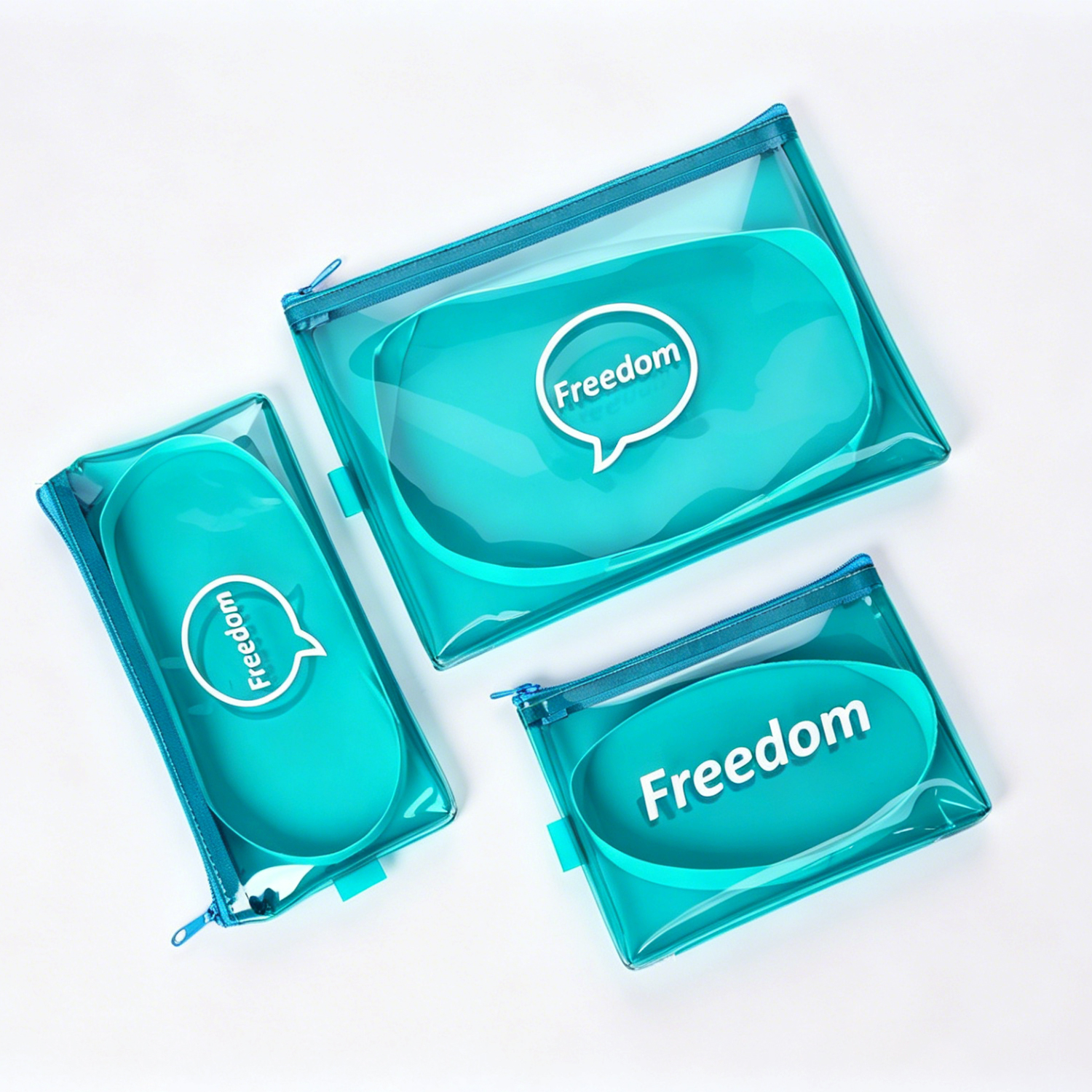
Why accessory choice is a specification decision, not a decoration decision
In most OEM cosmetic bag projects, accessories are added at the very end of the quotation, after material, size and printing have already been fixed. That order is backwards. Accessories sit exactly where the product is used hardest: at the grip, at the zipper pull, and at the surface that rubs against other items inside a toiletry bag or a handbag.
The documented application profile for Hansun's Cosmetic Bag (model CB-2026-002) makes the constraint explicit. The product is used in the gift packaging industry, commonly in China, and is suitable for brand promotional gifts and supermarket retail supporting projects. Its working condition is defined as room-temperature indoor storage and daily outdoor carrying, with occasional humid environment use. Its operation mode is high-frequency repeated daily use. The stated function is daily portable carrying, brand image promotion and item storage, and the accessory set is defined as hang tags, webbing and brand stickers. The special requirement is stated as food-grade eco-friendly PVC, REACH compliant, scratch-resistant and logo printing wear-resistant.
Read together, those lines define the whole accessory decision. Nothing in that profile rewards decoration for its own sake; everything rewards an accessory that survives being handled, packed and unpacked again and again. The question for an OEM buyer is therefore not which accessory is generally superior, but which combination matches the duty cycle, the humidity exposure and the wear-resistance requirement of the specific program.
Three points where accessory risk concentrates: the attachment point (how the tag or loop is fixed to the bag), the contact point (where hands and contents rub the accessory), and the print surface (where the logo either stays readable or does not). Each of the three accessories is exposed at a different one of these points, which is why they are specified together rather than ranked against each other.
What the cosmetic bag market looks like heading into 2026
Accessory decisions are being made inside a market that is expanding, and inside a compliance environment that is tightening.
Deep Market Insights estimates the global makeup bags market at approximately USD 2.8 billion in 2025, projected to reach USD 4.5 billion by 2031. That figure should be read with the usual caution: market-size estimates vary substantially with scope, because some reports count only retail bags while others include industrial cases and containers as well. The direction of travel, however, is consistent across sources.
On materials, Cognitive Market Research identifies nylon as the dominant material in the makeup bag market on the strength of its durability and water resistance, with aluminium cases the fastest-growing segment for professional use. The material list for Hansun's Cosmetic Bag reflects the same practical spread — PVC, PU leather, canvas, nylon and mesh — and that matters for accessories, because a brand sticker specified for a smooth PVC panel is not automatically right for canvas or mesh.
Sustainability expectations are part of the brief as well. A 2025 industry survey cited by DH Bags found that approximately 55% of consumers prioritize sustainable and eco-friendly materials in cosmetic bag purchasing decisions. That number comes from a survey rather than a regulatory source, so it is best treated as a signal of buyer expectation rather than a precise measure — but the direction is consistent with the eco-friendly PVC requirement already written into promotional gift specifications.
Compliance is the part of the background that touches accessories most directly. In the United States, the FDA's Modernization of Cosmetics Regulation Act (MoCRA) mandates facility registration and product listing for manufacturers, which pushes supply-chain compliance requirements upstream to cosmetic accessories as well. In China, GACC Decree No. 284 takes effect on December 1, 2026 and introduces a risk-based customs supervision system for exported cosmetics and related products, with emphasis on digital verification and traceability. Both developments mean the accessory specification should be documented rather than assumed.
Supply-base context matters too: market analyses list major Chinese OEM clusters in Guangdong and Zhejiang provinces, alongside international private-label programs. Zhejiang Hansun Arts & Crafts Co., Ltd. is a Zhejiang-based production-oriented manufacturer established in 1996, integrating manufacturing, online marketing and international trade, with Tote Bag and PVC Bag as its main product lines.
The three accessories, defined by the job each one does
Hang tags: brand image and retail information
A hang tag is a printed tag attached to the bag itself, normally by a loop or tie through a punched hole, at the handle, or at the zipper pull. Its job is the one no other accessory performs: it is read. In brand promotional gift programs the tag carries the brand identity; in supermarket retail supporting projects it also carries the information a retail shelf needs.
Because the tag is a printed item, it is the accessory most exposed to the logo-printing question. Hansun's Cosmetic Bag model CB-2026-002 is produced with hot stamping, UV printing, embossing and heat sealing among its decorative crafts, which is the same family of processes buyers evaluate when they ask about wear-resistant logo printing. The specific method applied to a tag, or to the bag body behind it, should be confirmed per project, because print surface and print method need to be matched rather than assumed.
Two design details decide whether a hang tag still looks right at the end of a season: the stiffness of the tag stock, and how the loop is fixed. A tag that flexes easily is more comfortable against the hand but shows handling marks sooner; a rigid tag holds its edges but can crack at the punch hole. Neither option is wrong — the point is to choose deliberately for the duty cycle, which is here defined as high-frequency repeated daily use.
Webbing: the handling layer
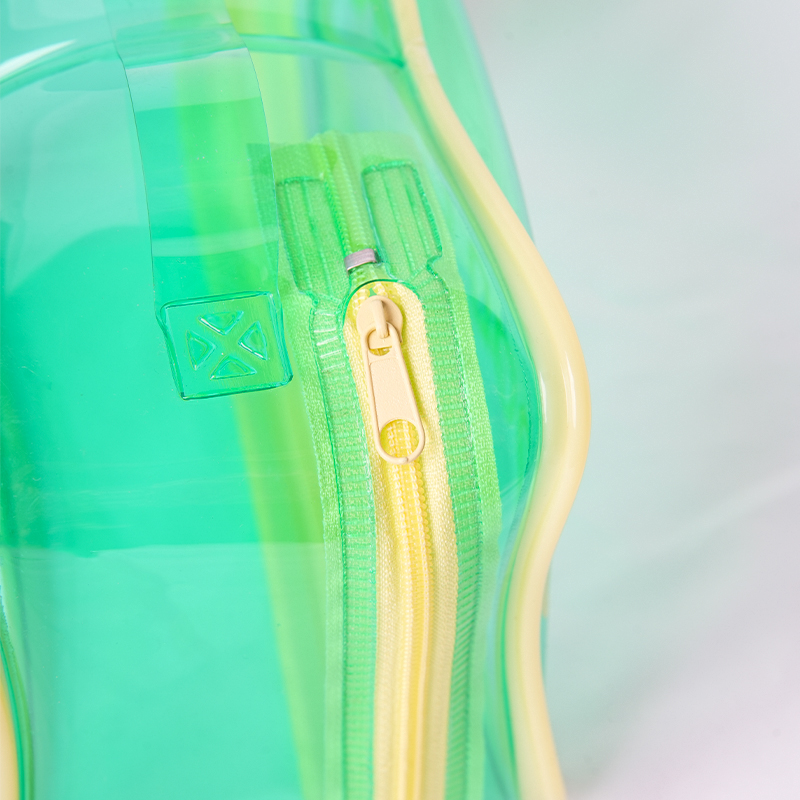
Webbing is the woven strip that carries the physical load. Depending on format, it appears as a carry loop, a short handle, a strap, or the loop that holds the hang tag. This is the accessory tied most directly to daily portable carrying, and the one that spends the most time in contact with hands, bag interiors, and whatever else is being carried.
That has two consequences for OEM buyers. First, webbing is where abrasion and moisture exposure concentrate: the grip and the fold take repeated friction, and the occasional humid environment exposure defined in the application profile lands on the same area. Second, webbing is a structural element rather than a surface — if the brand mark has to appear on the webbing itself instead of on the bag body, that decision has to be made before construction, not after.
Webbing also connects the accessory set together. When the hang tag is tied at the webbing loop, one accessory becomes the attachment point for another, and a weakness in either one becomes visible in the same place.
Brand stickers: low-profile surface identification
A brand sticker is an adhesive label applied to the bag surface or to the packaging. It adds almost nothing to the weight of a cosmetic bag — relevant when finished units weigh between 20g and 80g per piece depending on material and size — and it can be placed exactly where the brand needs to appear.
The trade-off is substrate. Adhesive performance depends on what the sticker is applied to, and the material list for this product covers PVC, PU leather, canvas, nylon and mesh: five surfaces with different behaviour under handling and humidity. A sticker chosen for a smooth clear PVC panel is not automatically the right choice for a textured canvas body. The same applies to the top film, which is what protects the printed logo, so sticker construction should be specified together with the wear-resistance requirement rather than separately.
Where item storage fits in
Item storage is largely a bag-body function, but accessories influence it in three concrete ways. A tag tied at the closure can change how easily the bag opens and closes, so attachment placement should be checked against the way the pouch will actually be packed. A webbing loop allows a small pouch to be hung rather than stacked, which is a practical advantage in toiletry and travel use. An applied sticker can carry the identification a stored or retail-displayed unit needs, keeping mixed batches distinguishable without changing the bag construction.
Step-by-step: how to specify the accessory set for an OEM cosmetic bag
- Start from the project type, not the accessory. A brand promotional gift program and a supermarket retail supporting project weight the accessories differently. The gift program leads with brand image promotion; the retail project also needs the hang tag to do retail-facing work. Decide this first.
- Map each accessory to a physical duty. Ask where hands will touch the bag (webbing), what will be read (hang tag), and where the mark will sit on the surface (brand sticker). The documented operation mode is high-frequency repeated daily use, so every accessory should be specified for repeated contact rather than one-time presentation.
- Check the working conditions. The application profile for this product defines room-temperature indoor storage, daily outdoor carrying and occasional humid environment use. Accessory materials, adhesives and attachment loops should all be reviewed against occasional humidity, not against a fully dry indoor scenario.
- Specify logo printing and wear resistance together. The stated special requirement is scratch resistance and logo printing wear resistance. Hot stamping, UV printing, embossing and heat sealing are the decorative crafts available on this product; the buyer's task is to state the wear requirement clearly so the process can follow from it.
- Confirm material compliance for every component. The documented requirement is food-grade eco-friendly PVC and REACH compliance. Because the accessory set includes printed and adhesive components, the compliance statement should cover accessory components as well as the bag body, and it should be aligned with destination-market rules, including MoCRA in the United States and the risk-based export supervision introduced by GACC Decree No. 284 from December 1, 2026.
- Lock the accessory set, then sample and quote. Confirm the combination, the print placement and the packing method with the supplier, request samples for handling and print validation, and only then confirm the quotation. This is also the stage at which accessory-related questions should be closed out for the program.
Use cases: which accessory leads in which project
Brand promotional gift program. The bag is given rather than sold, so the moment of reading is the moment that matters. Hang tags and brand stickers carry brand image promotion, while webbing carries the daily portable carrying that keeps the item in use after the campaign ends. Because the product is used for cosmetic storage, travel toiletry and beauty brand giveaways, the accessory set should survive being packed into another bag.
Supermarket retail supporting project. Here the accessory has to work twice — once as branding and once as retail information. A hang tag is the natural carrier for that, with a brand sticker providing a low-profile mark that does not interfere with retail presentation.
Travel and toiletry formats. The Travel Toiletry Cosmetic Bag and Mini Zipper Cosmetic Pouch formats put the most stress on the handling layer, so webbing leads. Common sizes for this product are 15×10cm, 20×15cm and 25×18cm, and the format should be matched to how the pouch will be carried rather than chosen on appearance.
Hotel amenities and beauty brand giveaways. Both are listed among the applicable industries for this product. In amenity and giveaway formats, brand stickers and hang tags do most of the identity work, because they can be applied consistently across mixed material batches.
Mixed-material orders. When a program combines PVC, PU leather, canvas, nylon and mesh in one order, accessories are what keep brand presentation consistent across materials — provided the sticker and tag specification is confirmed against each substrate instead of being set once for the whole order.
Comparison table: hang tags vs webbing vs brand stickers
The table compares the three accessories against the conditions documented for this product: high-frequency repeated daily use, occasional humid environment exposure, and wear-resistant logo printing.
| Accessory | Typical form on / with the bag | Primary duty | Exposure in high-frequency daily use | Occasional humid environment | Logo printing and wear resistance | Typical project fit |
|---|---|---|---|---|---|---|
| Hang tag | Printed tag fixed by a loop or tie at the handle, zipper pull or webbing loop | Brand image promotion; retail-facing information | Handled at opening, inspection and shelf display rather than during carrying | Tag stock and attachment loop are the exposed parts; both should be confirmed for the program | Print method and tag stock selected together for wear-resistant logo printing | Supermarket retail supporting projects; brand promotional gift sets |
| Webbing | Woven strip used as carry loop, handle, strap or tag attachment point | Daily portable carrying and handling | Continuous, direct contact with hands and contents during carrying | Grip and fold areas are the parts most exposed to occasional moisture; specify accordingly | Branding normally applied to the bag body; if branding on webbing is required, confirm before construction | Programs where portability is part of the product story — travel toiletry and mini zipper pouch formats |
| Brand sticker | Adhesive label applied to the bag surface or to the packaging | Surface-level brand image promotion; practical identification | Stays in place during carrying; direct contact depends on placement | Adhesive and top film must be matched to the substrate — PVC, PU leather, canvas, nylon or mesh | Print is protected by the top film; wear resistance depends on film choice and placement | Promotional gift programs and retail packaging where low-profile branding is required |
Table entries describe the accessory set documented for the Cosmetic Bag model CB-2026-002 application profile — hang tags, webbing and brand stickers as accessories — together with the product's material list. Final parameters are confirmed per project at quotation and sampling.
Frequently asked questions
What compliance requirements apply to hang tags, webbing and brand stickers on a cosmetic bag?
The specification documented for this product states food-grade eco-friendly PVC, REACH compliance, scratch resistance and logo printing wear resistance. Because the accessory set includes printed and adhesive components, compliance should be confirmed for those components as well as for the bag body. Destination-market rules also apply: in the United States, the FDA's MoCRA mandates facility registration and product listing for manufacturers, and in China GACC Decree No. 284 takes effect on December 1, 2026, introducing risk-based customs supervision for exported cosmetics and related products with an emphasis on digital verification and traceability.
Can the three accessories be produced together with the bag as one order?
Yes. The accessory set documented for the Cosmetic Bag model CB-2026-002 is defined as hang tags, webbing and brand stickers supplied as accessories, and the bag itself is produced in PVC, PU leather, canvas, nylon and mesh, with hot stamping, UV printing, embossing and heat sealing among its decorative crafts. Zhejiang Hansun Arts & Crafts Co., Ltd., established in 1996, operates a 25,000 m² manufacturing facility with approximately 200 employees and an annual production capacity of approximately 20 million units.
How should buyers approach cost when comparing the three accessories?
Treat the three accessories as coverage rather than alternatives. Cost is driven by what each accessory has to do: tag stock and print method for the hang tag, strip construction and stitching for the webbing, adhesive and top film for the sticker, plus the wear-resistance requirement stated for the program. An accessory that has to be re-specified after sampling costs more in project time than the difference between options, so quotations should be requested against a confirmed accessory specification so that the comparison is like-for-like.
Can samples be requested to validate the accessory set before mass production?
Sampling is the stage at which accessory decisions should be confirmed: handling feel on the webbing, print quality and wear resistance on the tag and sticker, and attachment security at the loop. Buyers can request samples and quotations through the contact details below, using the documented accessory set — hang tags, webbing and brand stickers — as the fixed reference for the evaluation.
What determines lead time for a cosmetic bag order with a full accessory set?
Lead time follows the confirmed specification rather than a fixed figure. Material selection across PVC, PU leather, canvas, nylon or mesh, the custom size, the decorative craft used for logo printing, the accessory combination and the packing method all feed into it. The practical step is to lock the accessory set and the print placement before sampling, so the schedule quoted reflects a specification that will not change afterwards. Current lead time and order scheduling should be confirmed directly with the supplier at quotation.
Conclusion: match each accessory to its duty, then combine all three
Hang tags, webbing and brand stickers are three answers to three different questions. Hang tags answer what the brand says when the bag is read. Webbing answers how the bag survives being carried every day. Brand stickers answer where the mark sits on the surface. For brand promotional gifts and supermarket retail supporting projects, the practical answer is a combination — a tag for reading, webbing for carrying, a sticker for surface branding — with each element specified against the same three conditions: high-frequency repeated daily use, occasional humid environment exposure, and wear-resistant logo printing.
Buyers who fix those conditions before choosing accessories rarely need to revisit the decision after sampling. Buyers who leave accessories to the end of the quotation usually do.
Next step: samples, quotation and product documentation
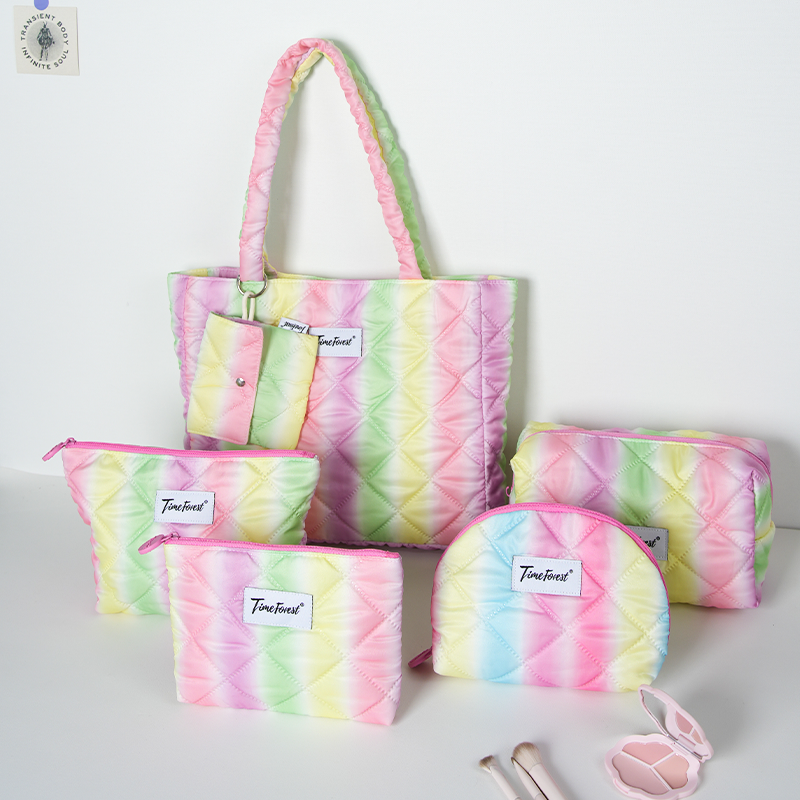
Zhejiang Hansun Arts & Crafts Co., Ltd. is a Zhejiang-based production-oriented manufacturer established in 1996, integrating manufacturing, online marketing and international trade, with approximately 70% of sales exported to markets in Southeast Asia, Europe, North America, the Middle East and major cities domestically and internationally. The Cosmetic Bag model CB-2026-002 is available in PVC, PU leather, canvas, nylon and mesh, in custom sizes, with accessory sets including hang tags, webbing and brand stickers.
To request samples or a quotation, or to download product documentation:
- Product brochure (PDF): Hansun product brochure
- Website: www.hansungift.com
- Email: hansun20@hansungift.com
- Tel: +86 13655771851
- WhatsApp: +60 10-8838562
- Address: NO.8388, Century Road, Longgang City, Wenzhou, Zhejiang, China 325802
Have Questions or Need More Details?
Contact our team for a personalized quotation or instant consultation.
Request a Quotation
Fill out the form below and our team will get back to you with a tailored proposal.
WhatsApp Direct Chat
Prefer to chat in real-time? Message us on WhatsApp for instant assistance & quick answers.
- Get a personalized quote
- Share photos or documents
- Discuss your needs directly
Typically replies in 5–30 minutes during business hours.