
Key Technical Parameters for Custom Shopping Bags: Material, Print, and Hardware Specs
Key Technical Parameters for Custom Shopping Bags: Material, Print, and Hardware Specs
Durable custom shopping bags are decided by three parameter groups: material grade, print durability, and hardware and accessory integration. When all three are written precisely onto a specification sheet — and every production batch is held to that approved version — buyers get bags that survive repeat use, reorders that match the first shipment, and a supply program that can be extended year after year.
This guide is written for importers, distributors, brand owners, and procurement teams who have already selected a bag format and are moving into execution: writing the specification, approving the sample, and scheduling bulk production. It explains what belongs on a custom shopping bag specification, why each parameter exists, and how Hansun controls those parameters from design to delivery under its ISO 9001:2015 certification, certificate reference ISO-2026-7890.
Three technical questions decide most custom shopping bag outcomes: which material grade the bag is built from, how well the print survives handling and washing, and how hardware and accessories are integrated into the load path. This article addresses all three in that order, then shows how they are locked into a repeatable specification.
The Real Cost of Specification Drift
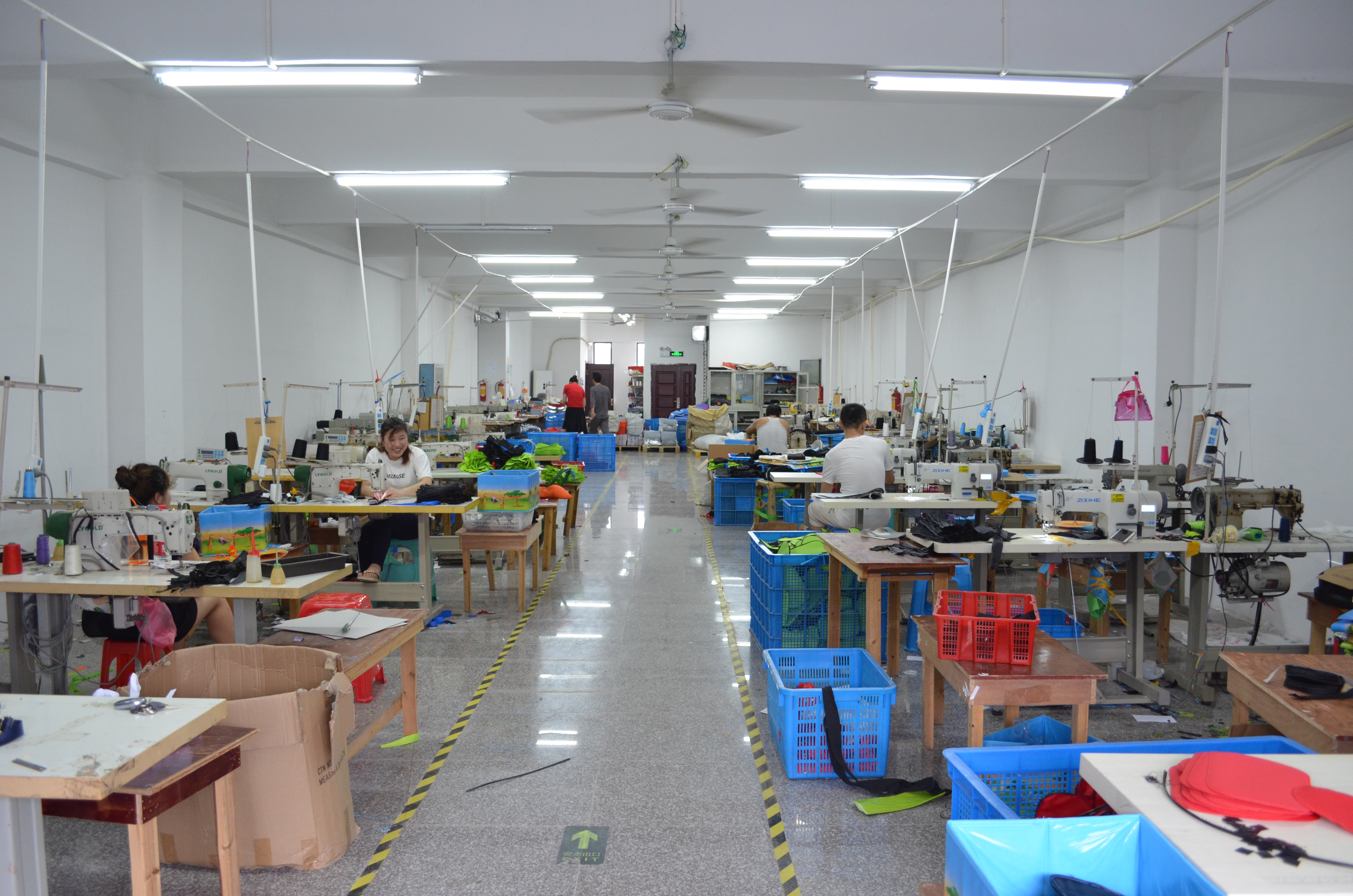
Four failure modes dominate complaints about custom shopping bags: material cracking, zipper damage, printing fading, and size deviation. None of them usually show up on the approved sample. They appear in the mass-production batch, or in the third reorder, when a parameter that was never written down gets interpreted differently on the factory floor.
Hansun's risk-control documentation treats all four as controllable outcomes rather than random defects. The documented control methods are specific: high-quality raw material selection, reinforced edge stitching, material pre-testing, and a standardized production process. The enterprise-level measures behind them include a pre-production material tensile test, 100% visual inspection before shipment, after-sales quality tracking, and strict size checking during production.
The gap between sample and bulk shipment is usually a documentation gap. A sample is approved by eye and by hand; a production run is executed by operators working from a written specification. If the sheet says "eco-friendly material" instead of naming a polymer grade and weight, or if it says "printed logo" without defining decoration method and adhesion expectation, the run will optimize against the wrong target.
The lesson for buyers is straightforward. A bag specification is not a design document; it is a control document. The more precisely it describes material grade, print expectations, and accessory construction, the less room remains for interpretation between orders — and the more realistic long-term supply commitments become.
Industry Background: Why Specifications Matter More in 2026
The reusable bag category has moved from a niche alternative into mainstream retail infrastructure. Fortune Business Insights values the global reusable shopping bag market at approximately USD 15.64 billion in 2025 and projects it to reach USD 28.87 billion by 2034. Material choice within that market is concentrated: Business Research Insights reports that polypropylene (PP) bags account for nearly 46% of total reusable bag production, driven by durability and cost-effectiveness, while tote bags hold a revenue share of roughly 40–41% of the global bag market on the strength of multi-purpose functionality.
Regulation is accelerating the shift. In the United States, 12 states including California and New York had implemented statewide bans on single-use plastic bags as of 2024, according to the National Conference of State Legislatures, which pushes volume toward heavy-duty reusable alternatives. In the European Union, the Packaging and Packaging Waste Regulation (EU) 2025/40 requires all packaging to be recyclable by 2030 and introduces mandatory recycled content targets for plastic packaging, per the European Commission.
Supply-side scale reflects the same direction. China's export value for suitcases, handbags and similar containers — a category that includes many types of shopping bags — reached USD 27.13 billion for January–November 2025, based on General Administration of Customs of China data.
For a buyer, the practical consequence is this: the category is no longer judged only on appearance and unit price. It is judged on whether the same bag can be produced again, at the same specification, at higher volume, in a regulatory environment that keeps tightening. That is a specification problem before it is a sourcing problem.
Parameter Group 1 — Material Grade and Substrate Selection
Material grade determines load tolerance, service life, and recyclability. Hansun's core production is concentrated in two formats — Tote Bag and PVC Bag — which between them cover the majority of retail, promotional, and supermarket programs. Both formats can be produced to different grades, which is precisely why the grade has to be written down.
What to write on the spec sheet
- Polymer family and grade — the base material and its grade designation, not a generic "eco-friendly" label.
- Fabric weight or thickness — the single most common source of batch-to-batch variation when left unspecified.
- Recycled content — relevant where EU PPWR recycled-content targets or buyer sustainability policies apply.
- Colourfastness and surface finish — especially for printed surfaces and for bags used in wet environments.
- End-of-life statement — whether the construction supports recyclability claims. Hansun's own comparison data states 100% recyclable material and a 50% lower carbon footprint versus disposable bags.
The food-grade question
Where a shopping bag will carry unwrapped food — bakery, produce, or loose grocery items — the material specification must name a food-contact-grade PVC compound rather than a general-purpose one. This is a documentation requirement, not an adjective: the requirement should be written into the spec sheet and confirmed against the supplier's material documentation before mass production begins. "Food grade" without a documented grade reference is not a specification.
PVC also behaves differently from woven PP in daily use. PVC substrates are moisture-resistant by nature, hold a clean printable surface, and wipe down easily, which is why they suit supermarket and food-adjacent programs where a reusable bag needs to be cleaned rather than replaced.
Parameter Group 2 — Print Durability: Scratch and Wear Resistance
Printing is where branding budget is concentrated and where failure is most visible. Printing fading appears in Hansun's risk register alongside material cracking, zipper damage, and size deviation, and the documented controls are material pre-testing and a standardized production process. In other words, print durability is engineered through material selection and process discipline, not through ink choice alone.
Writing a print specification that survives handling
- Decoration method — define how the artwork is applied, since each method interacts differently with the substrate.
- Adhesion expectation — the print should be specified as bonded to the surface, not resting on it.
- Abrasion-prone zones — handles, gussets, and base panels take the most friction. Artwork placed there needs a higher durability expectation than artwork on a flat front panel.
- Wash and wipe behaviour — relevant for reusable, washable programs. If the bag is marketed as reusable and washable, the print has to survive that use cycle.
- Colour reference — brand colours should be referenced to a standard rather than described verbally.
Hansun's customization options include logo, size, and material, so print parameters and substrate parameters are specified together rather than in isolation. A print specification written against the wrong substrate is the most common reason a first batch looks correct and a fifth batch does not.
Parameter Group 3 — Hardware and Accessory Integration
Hardware and accessories are where a shopping bag usually fails first, because they carry the load. Zipper damage is a documented failure mode in Hansun's risk register; reinforced edge stitching is the documented control. Three accessory groups belong on every custom specification.
Webbing and handle attachments
Webbing width, stitch pattern, and attachment method should be specified by load case rather than by appearance. Handle joints are the highest-stress point on a reusable bag, particularly in supermarket retail where bags are loaded to capacity and reused daily. Reinforcement at these joints is the difference between a bag built for occasional promotional use and one built for weekly grocery runs.
Zippers, closures, and metal components
Where a bag uses a zipper closure — common on foldable and travel-oriented formats — the closure type and pull belong on the spec sheet, along with a defined colour and finish. Zipper damage typically originates from a mismatch between closure strength and the load the bag is actually asked to carry, so the closure should be specified after the load envelope is defined, not before.
Hang tags, brand stickers, and finishing accessories
Hang tags and brand stickers are retail-facing accessories, and they create two specification obligations: the attachment method (string, loop, or adhesive) and the surface it attaches to. An adhesive label applied to a textured or low-energy surface behaves differently from one applied to a smooth PVC panel, so the sticker specification and the substrate specification have to be written as a pair. Hang tag attachment points should also be specified so the tag does not tear the bag panel or fall away in transit.
Size tolerance is a hardware issue too. Hansun's documented controls include strict size checking during production. A bag that is off by a narrow margin in one dimension can fail to stack in a retail display or fit a fulfilment line, even when the material and print are perfect.
How Spec Adherence Is Managed from Design to Delivery
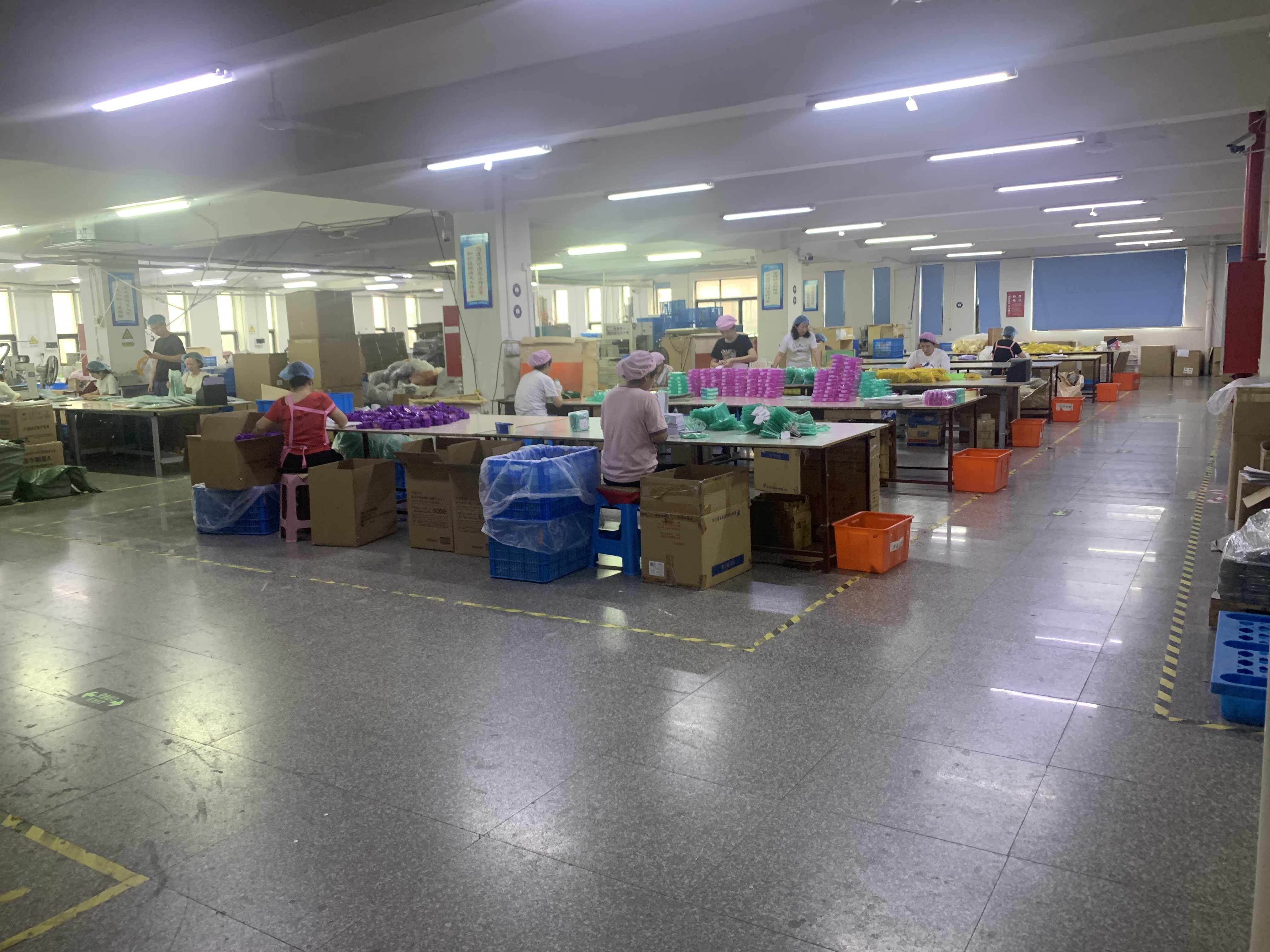
Specifications only hold if a system holds them. Zhejiang Hansun Arts & Crafts Co., Ltd. operates an ISO 9001:2015 certified quality management system, certificate reference ISO-2026-7890, covering design-to-delivery processes. In practice, that means the parameter groups described above are not renegotiated on the production floor.
The capacity behind that system is long-established. Hansun was founded in 1996 and today operates a 25,000 m² factory with 200 employees and a 25-engineer R&D team. Annual output reaches 20,000,000 units, with a monthly production capacity of 1,500,000 units and a minimum order quantity of 3,000 pieces. Approximately 70% of output is exported, serving customers worldwide across Southeast Asia, Europe, North America, and the Middle East.
The quality measures applied to a custom order follow the process rather than the batch:
- Pre-production material tensile testing before the run begins.
- Material pre-testing targeting the documented risk areas: cracking, fading, hardware failure, and dimensional drift.
- Reinforced edge stitching and a standardized production process.
- 100% visual inspection before shipment.
- Strict size checking during production.
- After-sales quality tracking that feeds back into the next order.
For buyers, the operational benefit is repeatability. A specification approved once can be re-produced against the same controlled process, which is what makes long-term supply programs and distributor arrangements practical rather than aspirational.
Step-by-Step: Locking a Custom Shopping Bag Specification
- Define the application envelope. Record where the bag will be used — supermarket retail, brand promotional gifting, corporate welfare programs, cross-border e-commerce, or stationery and office supply — and how often it will be reused. Load, frequency, and environment drive every downstream parameter.
- Fix the material grade. Name the polymer family, grade, weight, recycled content position, and whether food-contact documentation is required.
- Write the print specification. Record decoration method, colour references, adhesion expectation, and any high-friction artwork zones.
- Specify hardware and accessories. Webbing, stitch reinforcement, closure type, hang tag attachment, brand sticker material, and dimensional tolerance.
- Validate with a sample. Hansun's sample turnaround is 3–5 days, which allows the specification to be tested physically before bulk commitment.
- Confirm commercial terms. Minimum order quantity is 3,000 units. Delivery terms are FOB, DDP, or EXW. Payment terms are 30/70, 50/50, or 100% before mass production.
- Agree the acceptance criteria. The documented acceptance criterion is a pre-shipment test, supported by 100% visual inspection and size checking.
- Archive the approved specification as the reorder baseline. Every subsequent batch is produced and inspected against that archived version, not against a photograph or a memory of the first sample.
Typical production lead time is 30–45 days, which means the specification should be locked before the order is placed rather than adjusted during the run.
Use Cases: Which Parameter Earns Its Cost Where
Different programs stress different parameter groups. The applications below reflect the programs Hansun's customization work is typically built around.
- Supermarket retail. Material grade and size tolerance dominate. Bags are loaded heavily, reused daily, and often need to be wiped clean — which is where PVC's cleanable, moisture-resistant surface performs well.
- Brand promotional gifts. Print durability and accessory finish dominate. The bag carries a brand message, so artwork that fades in the first month defeats the purpose of the spend.
- Corporate welfare programs. Balanced requirements: a bag that feels substantial, holds a printed identity, and survives regular use by the recipient.
- Cross-border e-commerce and office supply. Consistent sizing and transit durability matter most, particularly where bags are packed in mixed cartons and handled repeatedly.
- Travel and multi-purpose use. Hardware integration and material moisture resistance carry the weight, since these bags are loaded, folded, and carried repeatedly.

Comparison: Custom Programs vs. Off-the-Shelf and Disposable Bags
| Criteria | Non-customized mass-produced promotional bags / disposable plastic bags | Hansun custom OEM/ODM program |
|---|---|---|
| Customization | Fixed sizes and designs; no buyer-specific engineering | Customizable OEM/ODM service with logo, size, and material options |
| Manufacturing model | Buying from available stock or a generic production run | Full-process in-house manufacturing, eco-friendly durable material |
| Service life | Baseline reference for comparison | 30% longer service life per Hansun's comparison data |
| Delivery reliability | Industry average on-time delivery of 95% | 99.8% on-time delivery rate per Hansun's comparison data |
| Cost profile | No volume engineering; higher per-unit cost at scale | 10–15% lower unit cost for bulk orders; no extra mold cost for custom designs |
| Maintenance & support | No sampling or after-sales pathway | 3–5 day sample turnaround, full after-sales support, reusable and washable |
| Environmental profile | Single-use reference point | 100% recyclable material and 50% lower carbon footprint vs disposable bags per Hansun's comparison data |
| Best suited to | One-off, non-branded needs | Brand promotional gifts, supermarket retail, corporate welfare, cross-border e-commerce, stationery and office supply |
A second table maps the specification itself — what belongs on the sheet, and what goes wrong when it is left vague.
| Parameter group | What belongs on the spec sheet | Failure mode if left vague |
|---|---|---|
| Material grade | Polymer family, grade, weight, recycled content, food-contact requirement where applicable | Material cracking under load; inconsistent feel between batches |
| Print durability | Decoration method, colour reference, adhesion expectation, high-friction artwork zones | Printing fading or scratching off during handling and washing |
| Hardware & accessories | Webbing width and attachment, stitch reinforcement, closure type, hang tag and brand sticker fixing | Zipper damage; handle separation; lost or torn hang tags |
| Dimensions | Finished dimensions with a stated tolerance | Size deviation affecting retail display, packing, or fit |
Frequently Asked Questions
What quality management system supports specification adherence on custom shopping bag orders?
Zhejiang Hansun Arts & Crafts Co., Ltd. operates an ISO 9001:2015 certified quality management system, certificate reference ISO-2026-7890, covering design-to-delivery processes. Specification adherence is supported by a pre-production material tensile test, 100% visual inspection before shipment, strict size checking during production, and after-sales quality tracking.
What customization parameters can be specified on a custom shopping bag order?
Hansun provides OEM and ODM production services. Customization options include logo, size, and material, covering the material grade, print, and hardware parameters described in this guide. Core production formats are Tote Bag and PVC Bag, produced through full-process in-house manufacturing with a 25-engineer R&D team and a monthly production capacity of 1,500,000 units.
What are the purchasing terms, minimum order quantity, and acceptance criteria?
Minimum order quantity is 3,000 units. Delivery terms are FOB, DDP, or EXW. Payment terms are 30/70, 50/50, or 100% before mass production. Acceptance criteria are based on a pre-shipment test. On cost, Hansun's comparison data indicates 10–15% lower unit cost for bulk orders with no extra mold cost for custom designs.
How fast can a sample be produced and validated before bulk production?
Sample turnaround is 3–5 days. Sampling is the point at which the material grade, print durability, and hardware specification are tested physically, before the order moves into a full production run.
What production lead time and capacity should be planned for a bulk order?
Typical production lead time is 30–45 days, supported by a monthly production capacity of 1,500,000 units and annual output of 20,000,000 units. Buyers building a long-term program should lock the specification before the order is placed. To start, request a sample or the full product catalog from Hansun — contact Naomi at hansun20@hansungift.com or via WhatsApp at +60 10-8838562 — or download the Hansun catalog at https://cdn.socialarks.com/sbsp/24767/0/2026/0413/69dc8372a4994.pdf.
Ready to Lock Your Specification?
Send your target material grade, print requirements, and accessory details to the Hansun team. Sample turnaround is 3–5 days, minimum order quantity is 3,000 units, and typical production lead time is 30–45 days.
Email: hansun20@hansungift.com | Tel: +86 13655771851 | WhatsApp: +60 10-8838562
Conclusion: Specifications Are the Foundation of Long-Term Supply
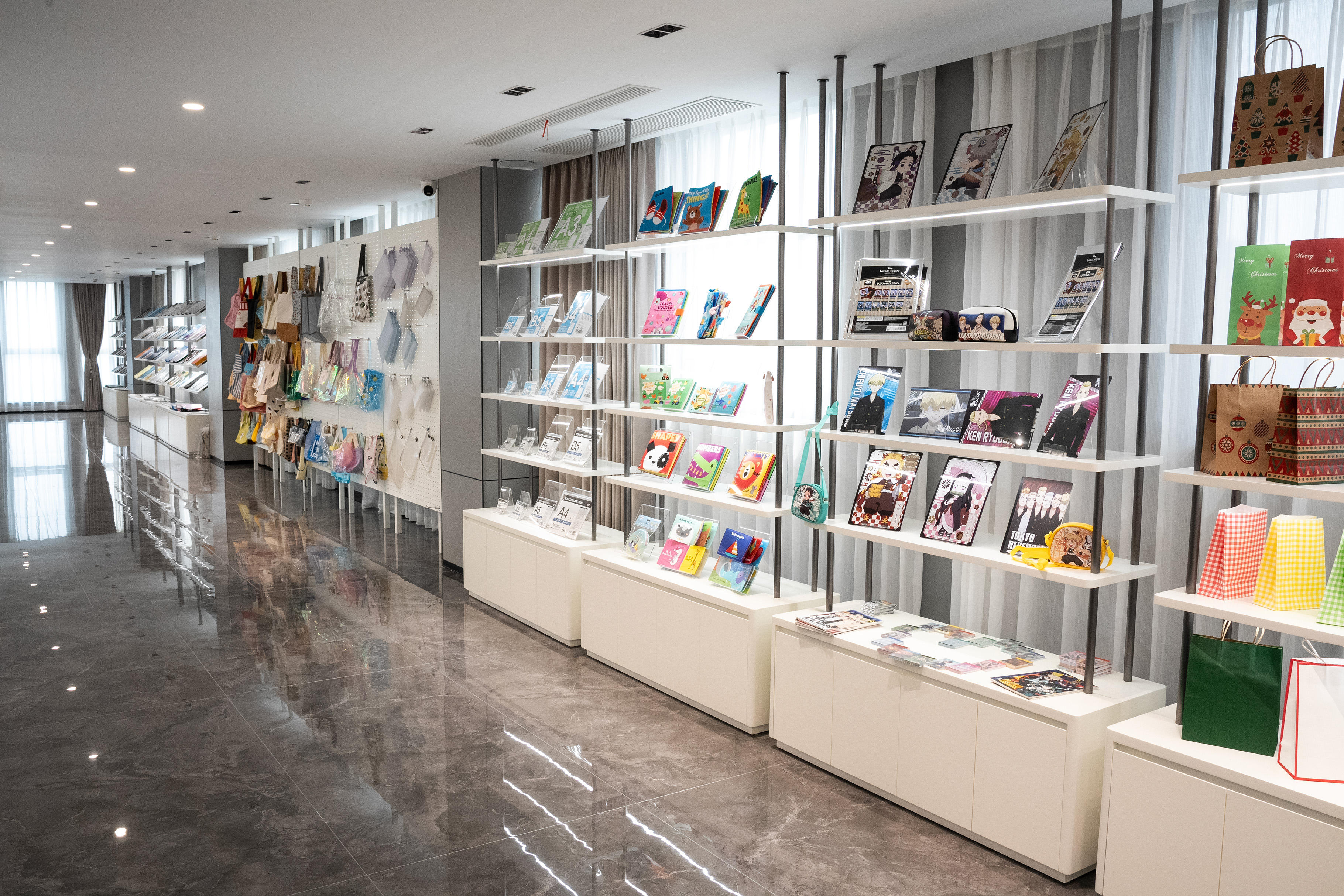
Material grade, print durability, and hardware integration are the three parameter groups that decide whether a custom shopping bag performs in the field — and whether it can be produced again at the same standard. Written precisely, they turn a single order into a repeatable specification. Left vague, they turn every reorder into a new negotiation with the factory floor.
For buyers in the decision and execution stages, the sequence is unchanged: define the application, fix the material grade, write the print and hardware specification, validate it in a sample, and archive it as the reorder baseline. Controlled under an ISO 9001:2015 design-to-delivery system and backed by a 25,000 m² factory, a 25-engineer R&D team, and a monthly capacity of 1,500,000 units, that process is what makes a long-term shopping bag supply program predictable rather than hopeful. Learn more at https://www.hansungift.com/.
Have Questions or Need More Details?
Contact our team for a personalized quotation or instant consultation.
Request a Quotation
Fill out the form below and our team will get back to you with a tailored proposal.
WhatsApp Direct Chat
Prefer to chat in real-time? Message us on WhatsApp for instant assistance & quick answers.
- Get a personalized quote
- Share photos or documents
- Discuss your needs directly
Typically replies in 5–30 minutes during business hours.