
PVC vs PU Leather Cosmetic Bags for Brand Promotional Gifts: A 2026 Comparison Guide
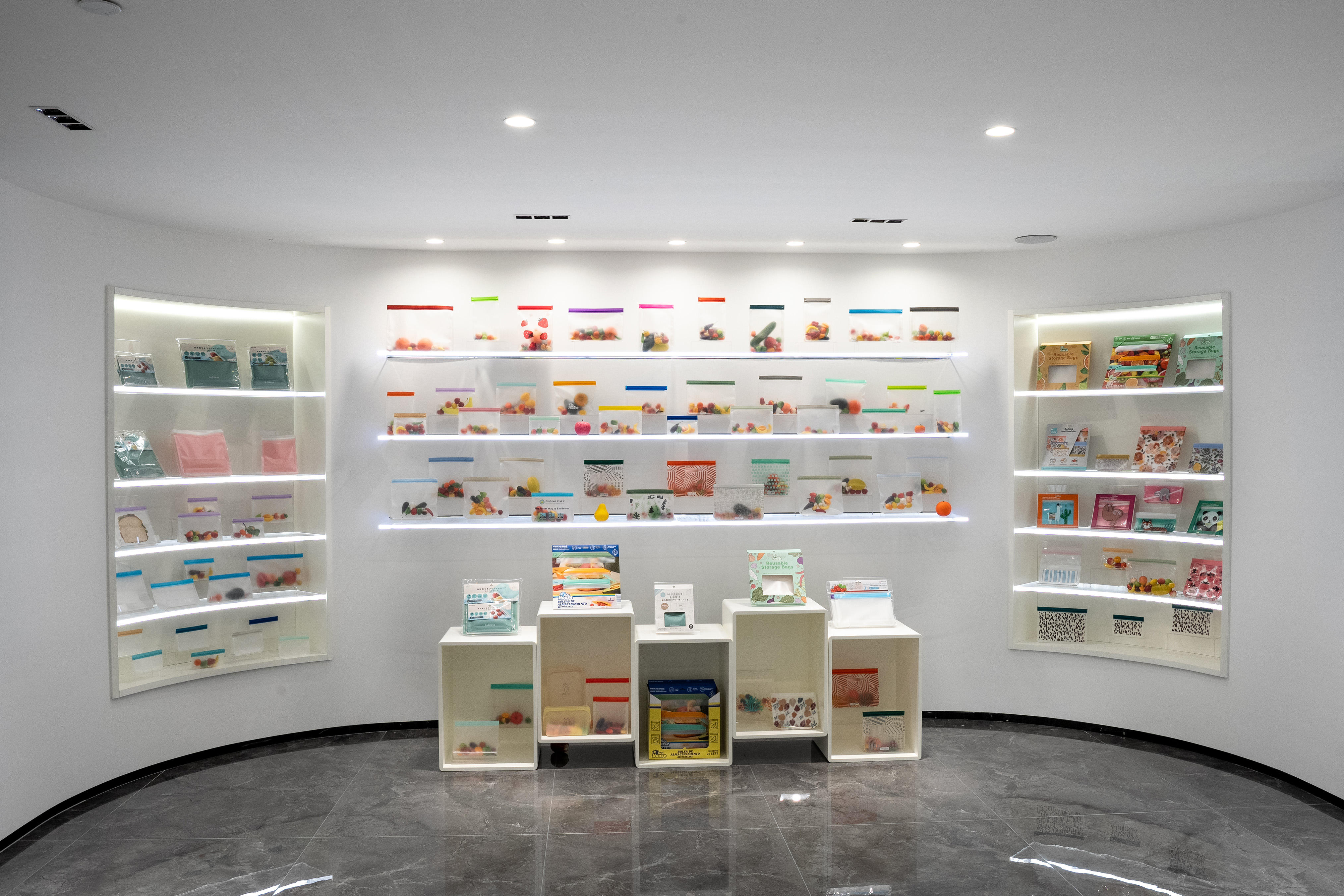
PVC vs PU Leather Cosmetic Bags for Brand Promotional Gifts: A 2026 Comparison Guide
Material Comparison for Promotional Programmes
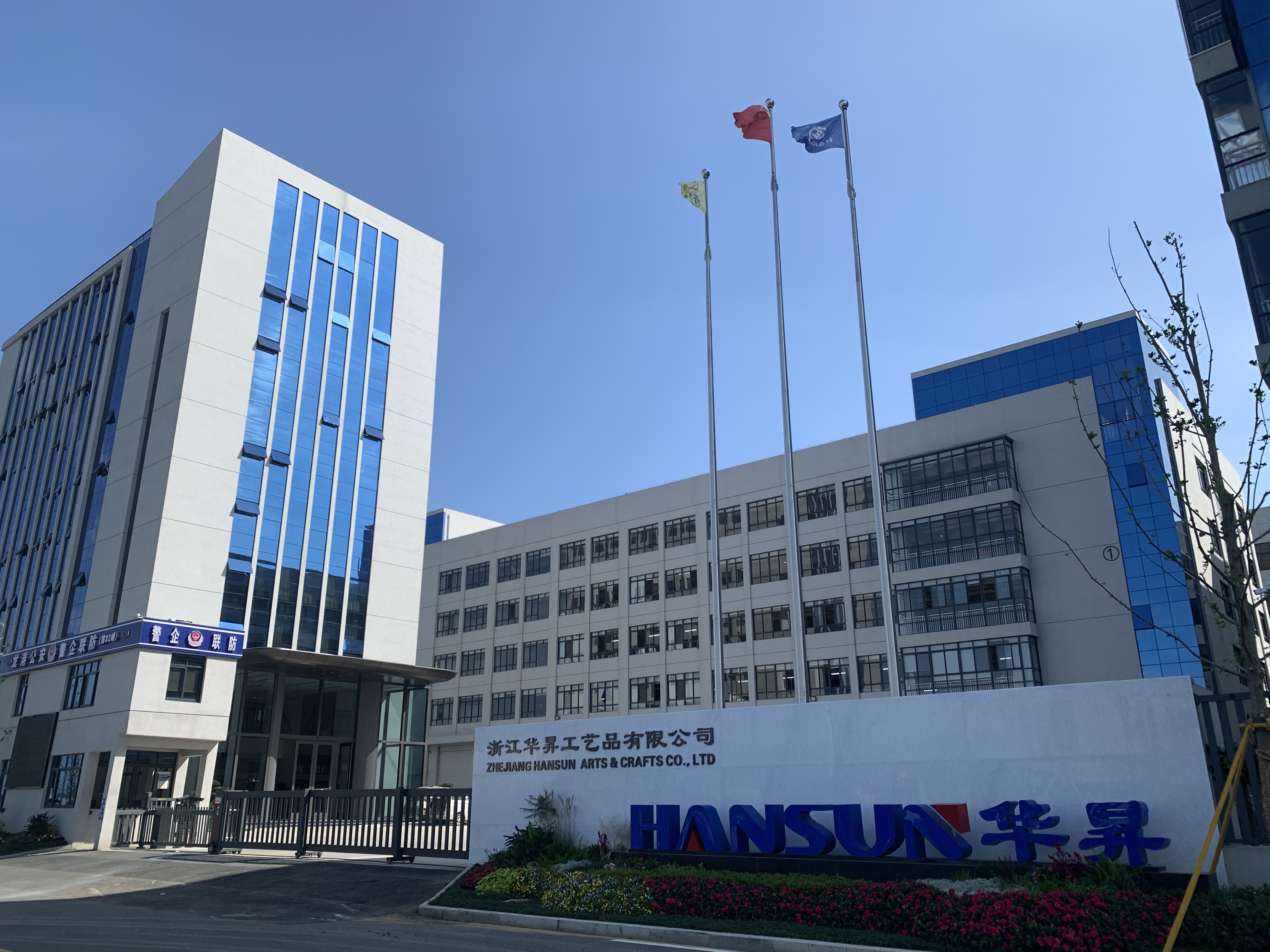
A PVC clear cosmetic bag and a PU leather cosmetic bag can carry the same logo, the same artwork file, and the same 3,000-piece order — yet they answer two different promotional jobs. Clear PVC is chosen when contents should stay visible, the surface should wipe clean, and cost efficiency per branded unit sets the budget. PU leather is chosen when hand-feel, embossed branding, and a premium gift impression carry the brand message. Both formats sit inside one production platform — Cosmetic Bag model CB-2026-002 — produced by Zhejiang Hansun Arts & Crafts Co., Ltd., a bag and gift manufacturer founded in 1996 in Longgang City, Wenzhou, Zhejiang, China.
This guide compares the two materials for brand promotional gifts and supermarket retail supporting projects. It covers material and compliance questions, scratch resistance and logo-printing wear, the accessory package (hang tags, webbing, brand stickers), and the practical sequence a buyer follows from brief to delivered carton.
Short answer: choose PVC Clear when the bag must be seen through — gift-with-purchase, supermarket or pharmacy checkout giveaways, travel toiletry kits, hotel amenities. Choose PU Leather when the bag must be felt — VIP gifting, press kits, premium cosmetics bundles, long-service corporate gifts. When one programme serves two audiences, split the order by format instead of forcing a single material to do both jobs.
Problem Definition: Why the PVC vs PU Leather Decision Is Usually Made Too Late
In most promotional bag projects, the material is not decided at briefing — it is decided at artwork approval, when the logo file arrives and someone has to name a substrate. By that point the format has usually been fixed by habit or by a competitor's bag seen at a trade fair, and the compliance workload, decoration method, unit weight, carton weight, and long-term logo durability are locked in with it.
That late decision creates a predictable set of failures: a clear bag chosen for a programme that needed a premium feel; a PU leather bag specified for a supermarket checkout giveaway where the cost per unit does not survive the volume; a logo applied with a method that looks perfect on the first day and unclear after three months of daily carry; and compliance documents requested after production, when the material batch has already been consumed.
The material decision becomes manageable when it is treated as five concrete questions rather than a taste preference:
- Where is the bag handed over? A checkout counter, a hotel room, a press event, and a distributor's stock room each imply a different expectation of perceived value.
- How long will the receiver keep and carry it? A promotional cosmetic bag is normally judged after months of use, not on the day of the event.
- Which compliance documents does the destination market require? Material declarations, social-compliance audits, and customs traceability requirements are checked before branding is discussed by serious buyers.
- How is the logo applied, and how does it behave under friction? The substrate and the decoration method must be chosen as a pair, not separately.
- What is the commercial frame? Minimum order quantity, lead time, and payment structure decide whether a format is realistic at all.
Industry Background: What the 2026 Market Implies for Promotional Buyers
The cosmetic bag category is large enough that promotional buyers are no longer choosing in isolation. Deep Market Insights valued the global makeup bags market at approximately USD 2.8 billion in 2025 and projected it to reach about USD 4.5 billion by 2031. Scope matters here: a separate estimate from The Insight Partners sized the bags-and-cases segment far lower, at roughly USD 232.55 million, because it counts a narrower slice of the category. Buyers should treat both figures as directional signals of demand rather than as a budget input.
Material usage inside the category is also uneven. Cognitive Market Research reported in 2025 that nylon is currently the dominant makeup bag material because of its durability and water resistance, while aluminum cases are the fastest-growing segment for professional use. PVC and PU leather sit mostly outside that professional-case trend: they compete in the promotional gift, travel toiletry, retail giveaway, and hotel amenity segments, where branding, transparency, and perceived value matter more than professional tooling.
Sustainability expectations are now part of the brief. One 2025 industry survey cited by DH Bags reported that around 55% of consumers prioritize sustainable and eco-friendly materials when choosing a cosmetic bag — a single-survey figure that should be read as a direction of travel rather than a fixed market law. For a promotional programme, that translates into one practical requirement: be ready to explain what “eco-friendly” means for the specific material, weight, and packaging used in the order.
Regulation is moving at the same time. China's GACC Decree No. 284, effective 1 December 2026, introduces a risk-based customs supervision system for exported cosmetics and related products, with an emphasis on digital verification and traceability. In the United States, the FDA's Modernization of Cosmetics Regulation Act (MoCRA) mandates facility registration and product listing for manufacturers, which reaches into the supply chain for cosmetic accessories. Neither rule is written specifically for a printed cosmetic pouch, but both change what documentation a brand should be able to produce on request.
The supplier landscape reflects that pressure. Third-party market commentary has named manufacturers such as Novotebag, Sephora's private-label programmes, and larger groups including LVMH among leading OEM/ODM players, alongside the Chinese industrial clusters in Guangdong and Zhejiang provinces. For a brand owner, the practical filter is not the biggest name on that list — it is the supplier that can document material and social compliance, hold a repeatable format, and deliver on a dated promotional calendar.
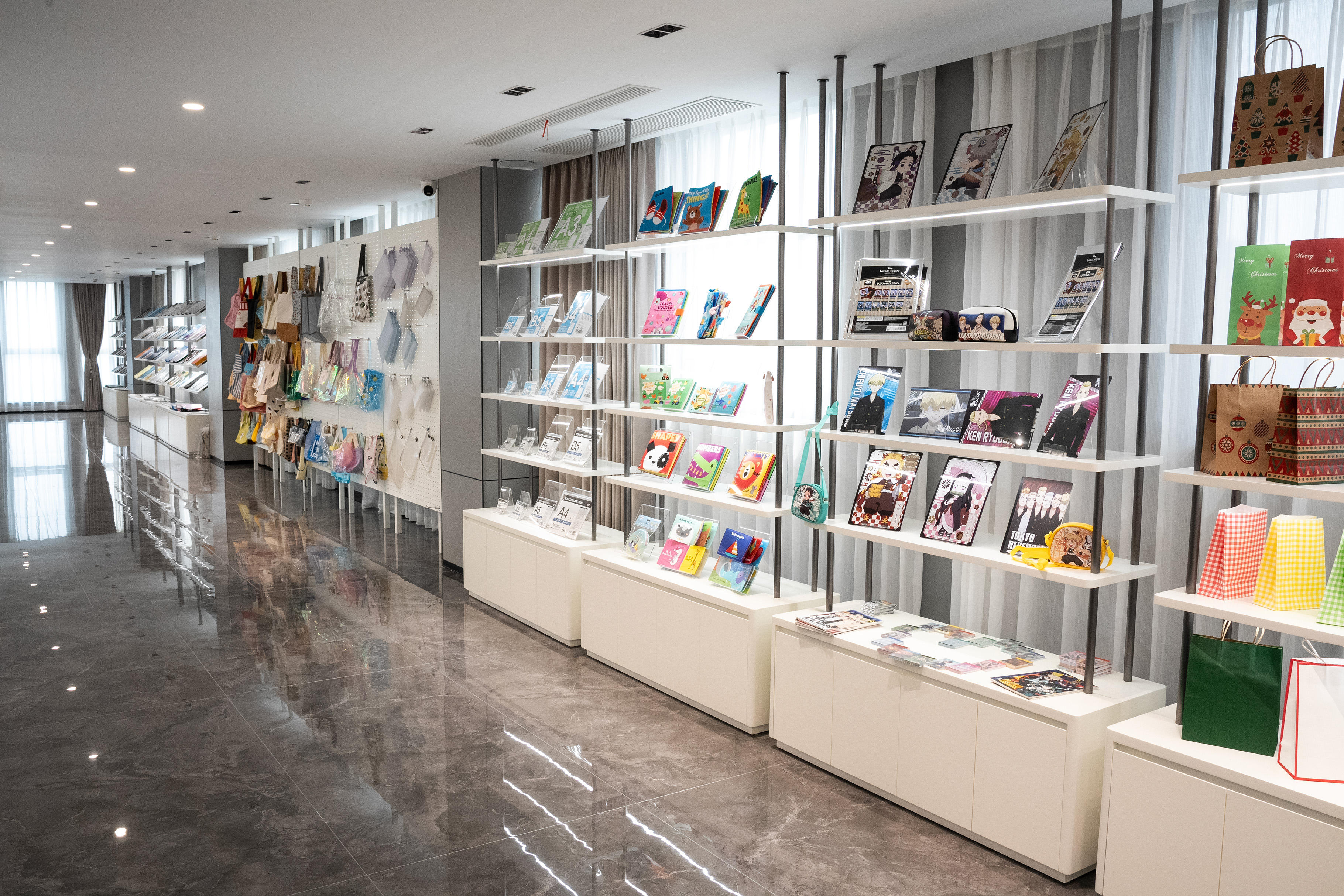
PVC Clear Cosmetic Bag vs PU Leather Cosmetic Bag: What Each Format Actually Delivers
The Cosmetic Bag model CB-2026-002 product record defines four formats in one range: PVC Clear Cosmetic Bag, PU Leather Cosmetic Bag, Travel Toiletry Cosmetic Bag, and Mini Zipper Cosmetic Pouch. The declared material set for the range is PVC, PU leather, canvas, nylon, and mesh; common sizes are 15×10 cm, 20×15 cm, and 25×18 cm with custom dimensions available; unit weight runs from 20 g to 80 g per piece depending on material and size; and the decoration and assembly crafts listed for the range are hot stamping, UV printing, embossing, and heat sealing.
PVC Clear Cosmetic Bag: Transparency, Wipe-Down Surfaces, and Cost Efficiency
A PVC clear cosmetic bag does a job that opaque materials cannot: it lets the product, the colour palette, or the retail artwork remain visible through the bag itself. That is why clear formats dominate gift-with-purchase, checkout giveaways, and travel kits where the bag is also a display surface. The declared usage for the range — cosmetic storage, travel toiletry, and beauty brand giveaways — maps directly onto this behaviour.
Two production facts matter commercially. First, heat sealing is listed among the crafts for the range, which is the construction method associated with clear PVC panel builds; it produces a welded seam rather than a stitched one. Second, the 20 g–80 g per piece weight range means a clear format can usually be specified at the lighter end, which reduces carton weight and freight cost per thousand units on a promotional drop.
PU Leather Cosmetic Bag: Structure, Hand-Feel, and Embossed Branding
A PU leather cosmetic bag trades transparency for presence. The surface accepts hot stamping and embossing — both listed among the range's crafts — which allows a logo to be pressed into the material rather than printed on top of it. For premium gifting, hotel amenities, and beauty brand kits, that difference is the entire point of the format.
PU leather formats typically sit heavier within the declared 20 g–80 g per piece band, and they pair naturally with the Travel Toiletry Cosmetic Bag and Mini Zipper Cosmetic Pouch formats in the same model family. Where a programme needs a set — a large toiletry pouch plus a small zipper pouch in the same brand language — PU leather keeps a consistent look across both pieces.
Compliance Reality Check: “Food-Grade”, REACH, and What Documentation Actually Proves
Buyers often ask for “food-grade PVC” or “eco-friendly PVC”. Used loosely, both phrases are marketing claims rather than material names: they only carry weight when a document issued for the specific material, ink, film, and process supports them. The same applies to REACH, the EU chemicals regulation — a REACH declaration is a document about a material and its substances, not a badge that a factory holds. A PU leather bag and a heat-sealed PVC bag with printed panels are different compliance cases, because the substrate, the adhesive, and the ink are different inputs.
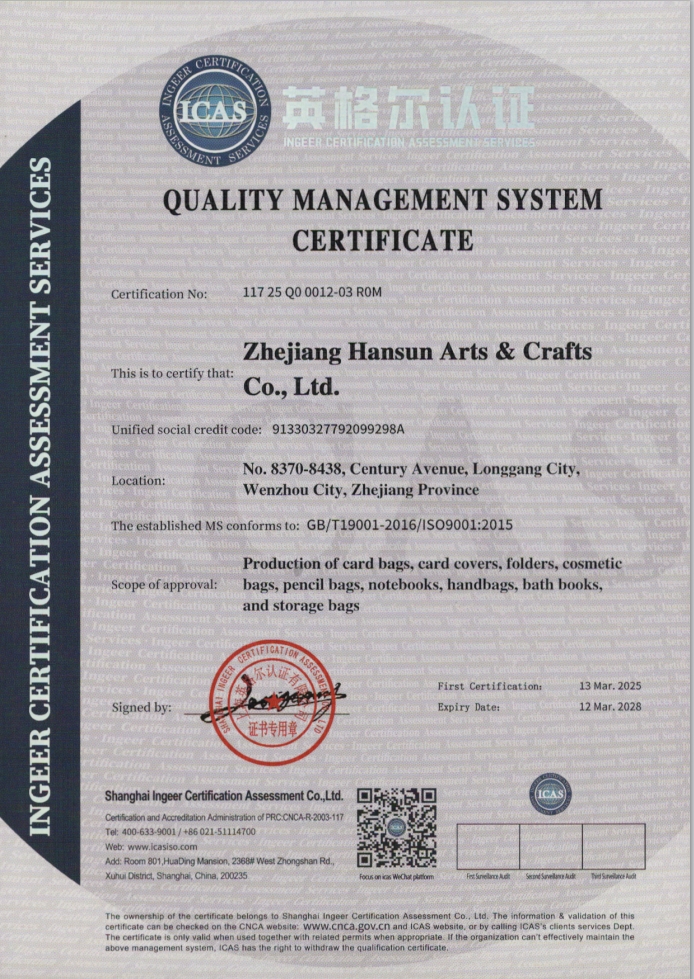
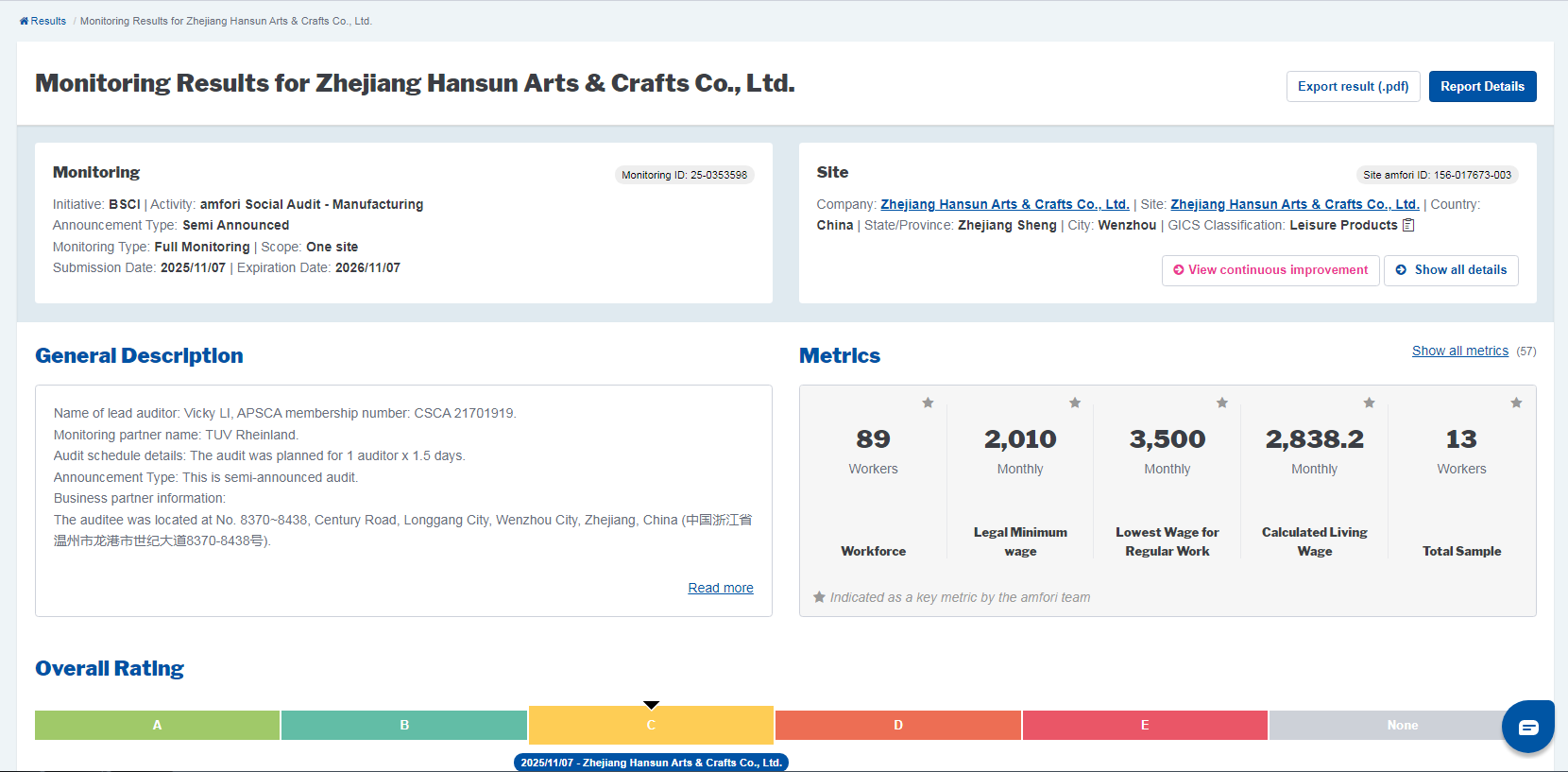
Zhejiang Hansun Arts & Crafts Co., Ltd. maintains a documented certification set that covers the systems behind both formats:
- ISO 9001:2015 — certificate ISO-2026-7890, scope: product design, production, quality control and delivery processes.
- BSCI (Business Social Compliance Initiative) — certificate BSCI-2026-4567, scope: factory social responsibility, ethical sourcing, working conditions; applicable markets include the EU, the Middle East, and global retail brands.
- Sedex 4 Pillars (SMETA) — certificate SEDEX-2026-0123, scope: factory social compliance, labour practices, health and safety, environmental standards; applicable markets include the EU, UK, North America, and Australia.
- Disney FAMA — certificate DSN-FAMA-2026-001, scope: production and supply of Disney licensed promotional bags and gifts.
These credentials are management-system and social-compliance evidence. They do not replace material-level documents, and no credible supplier should suggest otherwise. REACH declarations, food-contact statements, and ink or adhesive declarations are requested per project, against the exact specification and destination market.
Document pack to request before artwork approval: material declaration for the specified substrate, REACH conformity statement for the destination market, food-contact statement if the bag will sit near consumables, ink and adhesive declaration, certificate copies (ISO 9001:2015, BSCI, Sedex SMETA, Disney FAMA where relevant), and the written pre-shipment test plan that will act as acceptance criteria.
Scratch Resistance and Logo Wear Under High-Frequency Daily Carry
A promotional cosmetic bag is judged after months of use inside a handbag, a gym bag, or a suitcase. The relevant question is not whether a material scratches in theory, but which decoration method survives the friction the bag will actually meet.
The four crafts declared for the CB-2026-002 range behave differently. Hot stamping and embossing change the surface of the material itself, so there is no separate print layer to rub away. UV printing deposits a cured ink layer on the surface, which makes adhesion quality the critical variable. Heat sealing welds PVC panels together, so seam strength — not print — is the wear point on a clear bag.
Because quality control for the range is defined as depending on customer requirements, wear resistance is best handled contractually: the buyer writes the test items into the pre-shipment test acceptance criteria rather than assuming a default. Practical items to specify include a rub test on the printed or stamped logo, a tape-adhesion pull on UV-printed areas, a flex check along the heat-sealed seam of a clear PVC bag, and a zipper cycle check on any Mini Zipper Cosmetic Pouch included in the order.
Step-by-Step Breakdown: From Brief to Delivered Promotional Cosmetic Bag
The sequence below reflects how an OEM/ODM cosmetic bag programme is actually run — the same eight gates apply whether the order is a PVC clear giveaway or a PU leather gift set.
- Define the programme context. State where the bag is handed over, who receives it, and how long it should stay in use. This single paragraph decides most of what follows.
- Lock the format and material. Choose between PVC Clear Cosmetic Bag, PU Leather Cosmetic Bag, Travel Toiletry Cosmetic Bag, and Mini Zipper Cosmetic Pouch. Confirm the substrate from the range's material set (PVC, PU leather, canvas, nylon, mesh), the size (15×10 cm, 20×15 cm, 25×18 cm, or custom), and the expected unit weight within the 20 g–80 g per piece band.
- Confirm the compliance documents for the destination market. Resolve REACH or food-contact questions, customs traceability requirements such as those introduced by GACC Decree No. 284 for China-origin exports, and any retail customer audit requirements before tooling is committed.
- Choose the decoration and build method. Hot stamping, UV printing, embossing, and heat sealing each require their own artwork preparation and tooling. Decide the method together with the substrate — hot stamping and embossing on PU leather, heat sealing for clear PVC panel construction.
- Specify accessories and finishing. This is the layer that decides whether the bag reads as a promotional item or as a retail product: zipper closure and webbing pulls, a printed hang tag, a brand sticker or seal, and lining or inner structure. Every one of these must appear in the specification sheet, not in an email thread.
- Sample and pre-production check. Review the physical sample for construction, colour, logo placement, and hand-feel before mass production is authorised.
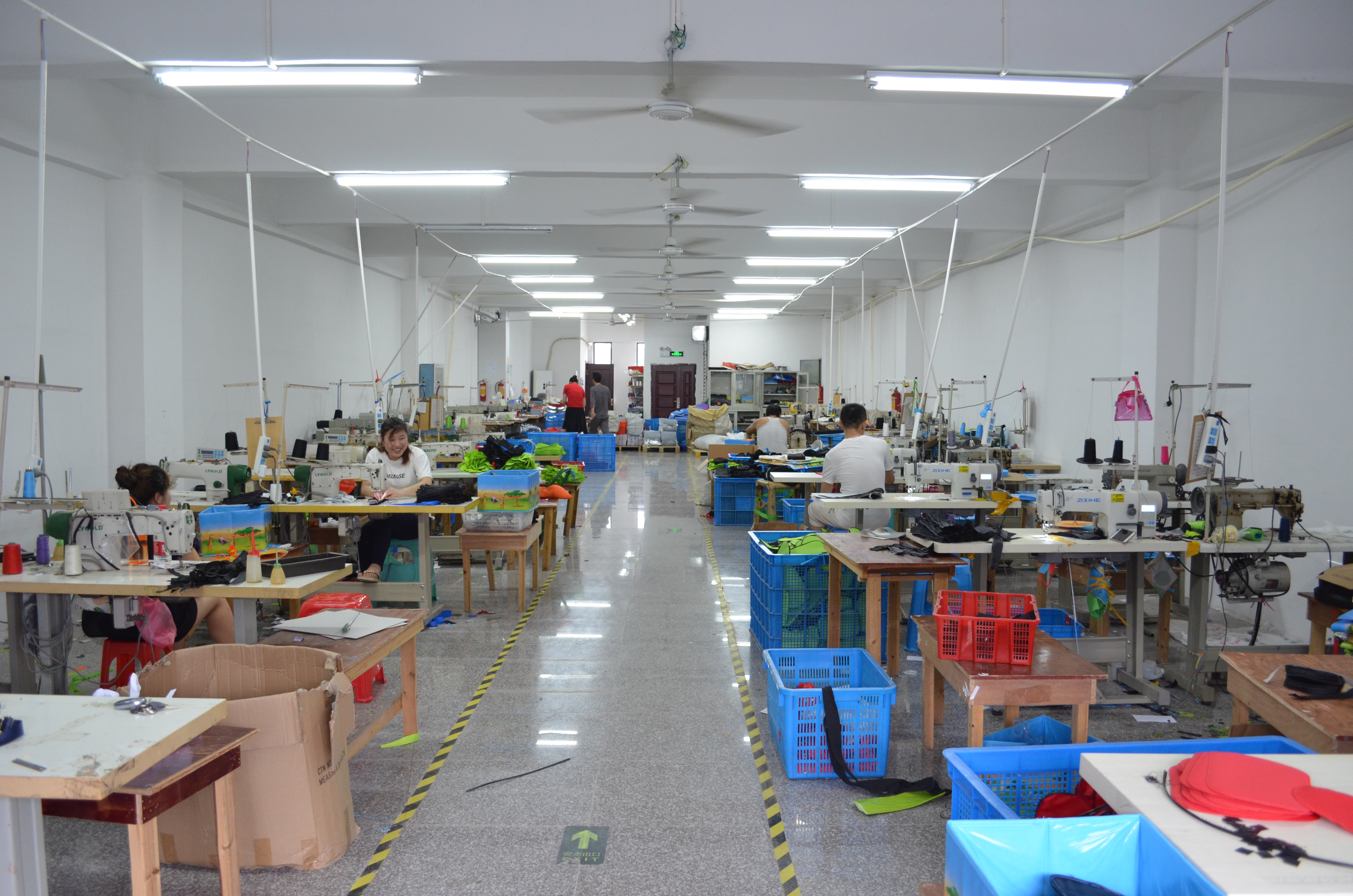
- Produce and control quality. Zhejiang Hansun Arts & Crafts operates a 25,000 m² facility with 200 employees, a 25-engineer R&D team, and a monthly capacity of 1,500,000 units; the minimum order quantity is 3,000 pieces and the typical lead time is 30–45 days. Quality control scope depends on customer requirements, which is why the buyer's test plan matters.
- Deliver and accept. Shipment terms are FOB, DDP, or EXW; acceptance is based on the pre-shipment test; payment structures used for these orders are 30/70, 50/50, or 100% before mass production.
Use Cases: Matching the Format to the Promotional Programme
Beauty Brand Gift-With-Purchase and Supermarket Retail Support — PVC Clear
For gift-with-purchase, a clear PVC bag lets the brand keep the product visible through the packaging while still carrying a printed logo, a hang tag, and a brand sticker. For supermarket retail supporting projects, the clear format also solves a practical problem: staff can see what is inside without opening the bag, which keeps giveaway handling fast at the checkout. The 15×10 cm and 20×15 cm sizes cover most single-product giveaways, with 25×18 cm used for multi-item kits.
Hotel Amenities and Travel Toiletry Kits — PU Leather and Mini Zipper
Hotel and travel programmes benefit from PU leather's structured, leather-look surface: a Travel Toiletry Cosmetic Bag in a hotel room reads as a guest amenity rather than as an advertisement. Pairing it with a Mini Zipper Cosmetic Pouch keeps the set compact for short stays while reinforcing the same brand language at a smaller size.
Premium Corporate Gifting and VIP Kits — PU Leather with Embossing
Where the bag is part of a VIP kit, embossed or hot-stamped PU leather carries more perceived value than a printed surface because the logo becomes part of the material rather than a layer on top of it. This is the format to choose when the recipient is expected to keep the bag in daily use long after the campaign ends.
High-Frequency Daily Carry at Retail Scale — Both Formats
Both formats can survive repeated daily use, and the delivery model is proven at supermarket scale. One OEM/ODM client in Japan ordered a 1,000,000-unit programme of reusable promotional bags for chain supermarket daily shopping and promotional gifts, running over one year. The project maintained a 99.7% product qualification rate, recorded zero delivery delay, and generated repeated orders from the same client for three consecutive years; the bags met Japan's eco-friendly standards and were recognised by both the client and end consumers. That programme covered a reusable shopping bag line rather than a cosmetic bag, but it demonstrates the volume, QC, and on-time delivery discipline that a large promotional cosmetic bag rollout demands.
Comparison Table: PVC Clear vs PU Leather Cosmetic Bag (Model CB-2026-002)
Because both formats are produced inside the same model range, the comparison is not “two factories” but “two substrates on one platform”. The table below lists declared specifications for the range and marks where the two formats behave identically.
| Decision Factor | PVC Clear Cosmetic Bag | PU Leather Cosmetic Bag |
|---|---|---|
| Format name in model CB-2026-002 | PVC Clear Cosmetic Bag | PU Leather Cosmetic Bag |
| Substrate | PVC | PU leather |
| Visual character | Clear, transparent format | Opaque, leather-look surface |
| Common sizes | 15×10 cm / 20×15 cm / 25×18 cm (custom available) | 15×10 cm / 20×15 cm / 25×18 cm (custom available) |
| Unit weight | 20 g–80 g/pc depending on material and size | 20 g–80 g/pc depending on material and size |
| Decoration and assembly crafts | Hot stamping / UV printing / embossing / heat sealing | Hot stamping / UV printing / embossing / heat sealing |
| Declared usage | Cosmetic storage, travel toiletry, beauty brand giveaways | Cosmetic storage, travel toiletry, beauty brand giveaways |
| Applicable industries | Beauty & cosmetics, travel & tourism, promotional gift, hotel amenities | Beauty & cosmetics, travel & tourism, promotional gift, hotel amenities |
| Customization scope (OEM/ODM) | Logo, size, material | Logo, size, material |
| Minimum order quantity | 3,000 pcs | 3,000 pcs |
| Lead time | 30–45 days | 30–45 days |
| Monthly capacity | 1,500,000 units | 1,500,000 units |
| Quality management coverage | ISO 9001:2015 (ISO-2026-7890): product design, production, quality control & delivery | ISO 9001:2015 (ISO-2026-7890): product design, production, quality control & delivery |
| Quality control scope | Depends on customer requirements | Depends on customer requirements |
| Acceptance | Pre-shipment test | Pre-shipment test |
| Delivery terms | FOB / DDP / EXW | FOB / DDP / EXW |
Read horizontally, the table shows that the commercial frame — MOQ, lead time, capacity, terms — is identical for both formats. The choice therefore comes down to substrate behaviour and the decoration method that behaviour allows, which is exactly why the specification should name both.
Frequently Asked Questions
Does a PVC or PU leather promotional cosmetic bag need REACH or food-grade documentation?
It depends on the destination market and on how the bag will be used. REACH is an EU chemicals regulation, so a REACH conformity statement is relevant when a PU leather or printed PVC bag is placed on the EU market; a food-contact statement is relevant only if the bag will sit against consumables. Both are material-level documents issued for the specific substrate, ink, and film — not factory badges. Zhejiang Hansun Arts & Crafts Co., Ltd. holds ISO 9001:2015 (ISO-2026-7890), BSCI (BSCI-2026-4567), Sedex 4 Pillars / SMETA (SEDEX-2026-0123), and Disney FAMA (DSN-FAMA-2026-001), which cover quality management scope plus factory social compliance. For exports from China, buyers should also factor in GACC Decree No. 284, effective 1 December 2026, which brings digital verification and traceability into customs supervision for cosmetics and related products.
Can one factory produce both PVC clear and PU leather cosmetic bags with custom logos?
Yes, when both formats sit inside the same model range. Cosmetic Bag model CB-2026-002 covers PVC Clear Cosmetic Bag, PU Leather Cosmetic Bag, Travel Toiletry Cosmetic Bag, and Mini Zipper Cosmetic Pouch, with OEM and ODM production services offered globally. Customization scope covers logo, size, and material; declared crafts are hot stamping, UV printing, embossing, and heat sealing. Zhejiang Hansun Arts & Crafts Co., Ltd. operates a 25,000 m² factory with 200 employees, a 25-engineer R&D team, an annual output of 20,000,000 units, and a monthly capacity of 1,500,000 units; approximately 70% of output is exported.
How does material choice affect the budget of a promotional cosmetic bag order?
Material choice changes four cost drivers before it changes the unit price: the substrate itself, the unit weight (declared at 20 g–80 g per piece for this range, which affects freight per thousand units), the decoration method and its tooling (hot stamping, UV printing, embossing, or heat sealing), and the accessory package (zipper and webbing pull, hang tag, brand sticker, lining). The commercial frame is fixed at a minimum order quantity of 3,000 pieces with delivery on FOB, DDP, or EXW terms and payment structures of 30/70, 50/50, or 100% before mass production. Buyers comparing quotations should compare them line by line against the same specification sheet, because a lower figure usually means weight, decoration method, or accessories have been reduced rather than the margin.
Can we evaluate a sample before committing to a 3,000-piece order?
Yes. Sampling and pre-shipment testing are the standard evaluation route for this range: acceptance is defined as a pre-shipment test, and quality control scope is set according to customer requirements, so the sample stage is where construction, colour, logo placement, hand-feel, and the accessory package are confirmed. It is also the right moment to run wear checks — a rub test on the stamped or printed logo, a tape-adhesion pull on UV-printed areas, a flex check on a heat-sealed PVC seam, and a zipper cycle test on any Mini Zipper Cosmetic Pouch in the order.
What is the typical lead time from artwork approval to delivery?
The declared lead time for this range is 30–45 days, supported by a monthly capacity of 1,500,000 units, which is what makes large promotional calendar deadlines achievable. A reference point: a 1,000,000-unit OEM/ODM promotional bag programme delivered for a Japanese chain supermarket client over one year maintained a 99.7% product qualification rate with zero delivery delay, and the client placed repeat orders for three consecutive years. To move to a quote or sample request, download the product catalogue (PDF) and send your specification to the sales team at hansun20@hansungift.com.
Conclusion: Choose the Substrate That Matches the Job the Bag Must Do
The PVC versus PU leather decision is not a question of which material is better. It is a question of which material performs the job the bag was ordered to do. PVC clear wins when contents must stay visible, surfaces must wipe clean, and weight and cost per branded unit drive the programme — gift-with-purchase, checkout giveaways, travel kits. PU leather wins when hand-feel, embossed branding, and a premium impression drive the programme — VIP gifting, hotel amenities, press kits, long-use corporate gifts.
What both formats share is more than the substrate difference suggests: one model range, one quality management system, one MOQ of 3,000 pieces, one 30–45 day lead time, and one pre-shipment acceptance checkpoint. That is the practical advantage of sourcing both formats from the same platform — the compliance file, the QC language, and the delivery schedule do not need to be rebuilt when a programme switches formats between seasons.
Request a Sample, a Quote, or the Full Catalogue
Send your format, material, size, decoration method, accessory list, and destination market, and the team will confirm the specification, the MOQ of 3,000 pieces, and the 30–45 day production window.
Contact: Naomi | Email: hansun20@hansungift.com | Tel: +86 13655771851 | WhatsApp: +60 10-8838562
Catalogue download: https://cdn.socialarks.com/sbsp/24767/0/2026/0413/69dc8372a4994.pdf
Website: https://www.hansungift.com/
Have Questions or Need More Details?
Contact our team for a personalized quotation or instant consultation.
Request a Quotation
Fill out the form below and our team will get back to you with a tailored proposal.
WhatsApp Direct Chat
Prefer to chat in real-time? Message us on WhatsApp for instant assistance & quick answers.
- Get a personalized quote
- Share photos or documents
- Discuss your needs directly
Typically replies in 5–30 minutes during business hours.