
Rainy Commute, Worn Logo: A Problem-Solution Guide for Promotional Cosmetic Bags
Rainy Commute, Worn Logo: A Problem-Solution Guide for Promotional Cosmetic Bags
A promotional cosmetic bag is judged twice. The first judgement happens at the counter, the event or the unboxing: does it look worth keeping? The second happens weeks later, on a wet morning, when the bag has been pushed through a commute — dropped into a tote, set down on a bathroom shelf, rubbed against keys, a phone edge and a zipper pull. By then the print on the front has thinned, the surface has gone cloudy with scuffs, and the brand mark that was supposed to work for months has quietly stopped working.
This guide is written for brand owners, promotional gift buyers and sourcing teams who are already in the evaluation stage. You know you need a cosmetic bag; the real question is which material, decoration and compliance combination survives high-frequency daily carry. Below, the two failure points that matter most — scratched surfaces and worn logo printing — are mapped to specific material and decoration decisions, and to the documentation a manufacturer should be able to show you before a purchase order is placed.
1. The Problem: Where Promotional Cosmetic Bags Actually Fail
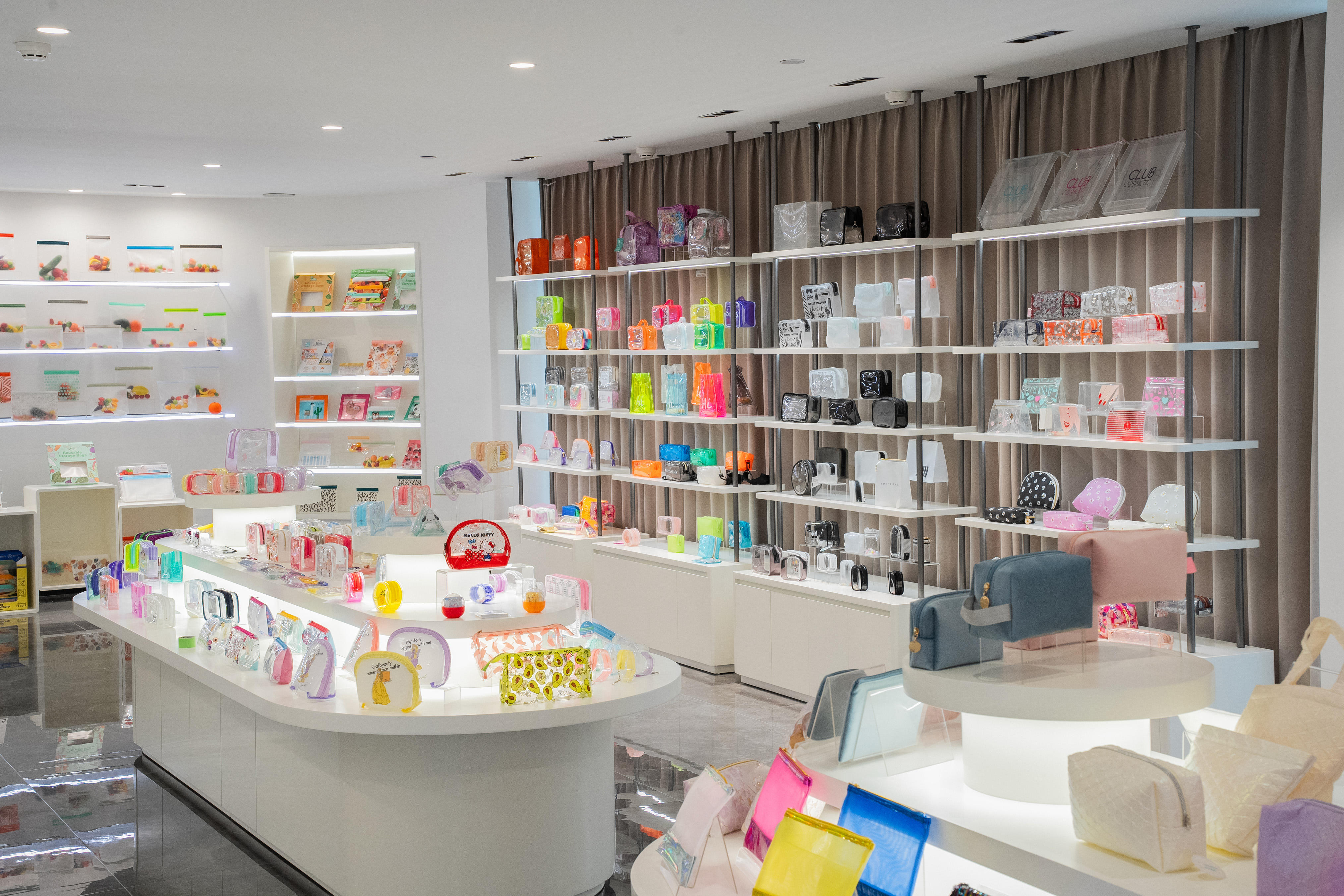
Wear on a promotional cosmetic bag is predictable. It concentrates exactly where the bag meets the world: the outer face, the corners, the fold lines, the zipper track and the attachment points of the webbing or strap.
Scratched and scuffed surfaces
Scratching is a hardness-and-friction problem, not simply a “cheap material” problem. A portable cosmetic bag that travels inside a handbag shares space with keys, coins, a metal zipper pull and the corner of a phone. Clear and transparent PVC shows scuff marks more strongly than a matte or textured surface, because light passes through the film and a scratch registers as a visual disturbance rather than as a simple surface mark. A PU leather cosmetic bag develops gloss marks at the corners and along fold lines where the material is repeatedly compressed. Canvas and coated fabrics abrade first at the edges.
Moisture is the second half of the surface problem. A bag stored in a bathroom or on a vanity takes up humidity; if it is then closed and packed for a trip, that moisture sits against the lining and the print. A bag described as a waterproof cosmetic bag usually means the outer material resists penetration — it does not mean a sealed, humid interior is harmless.
Worn logo printing
The logo is the entire reason the bag was ordered, which makes its wear the most expensive failure mode. It appears in three forms: surface print rubbing off at the areas that are touched most; print cracking along fold lines or across a curved panel; and hot-stamped foil dulling, flaking or losing contrast against the substrate.
Two variables decide most of the outcome. The first is whether the decoration sits on top of the substrate or is pressed into it — the closer the mark sits to the material itself, the longer it survives. The second is design discipline: thin lines, small serif type and fine gradients fail noticeably earlier than solid shapes and bold letterforms, because there is simply less material to lose before the mark becomes unreadable.
The quieter failures: hardware, moisture and accessories
Zipper closures that stiffen or lose their pull, webbing that frays at the attachment point, hang tags that crease and tear, brand stickers that peel from a curved panel, lining that separates at the seam — none of these is dramatic on its own, and together they decide whether the bag is kept or discarded.
The evaluation consequence matters for buyers: end users do not grade failures separately. An intact logo on a bag with a broken zipper pull still reads as a failed gift, and the brand that supplied it paid for the impression and received the opposite.
2. Background: Why Wear and Compliance Now Decide the Order
The category is expanding, and buyers are specifying it more precisely. The global makeup bags market was valued at approximately USD 2.8 billion in 2025 and is projected to reach USD 4.5 billion by 2031, according to Deep Market Insights. Report definitions vary — a narrower “bags and cases” scope published by The Insight Partners is measured in the hundreds of millions — so any single figure should be treated as scope-dependent rather than absolute.
Material behaviour shapes purchasing as much as market size does. Nylon is currently the dominant material in the makeup bag market because of its durability and water resistance, while aluminium cases are the fastest-growing segment for professional use, according to Cognitive Market Research. In promotional work, the practical translation is that more buyers now select a base material by performance — water resistance, scuff resistance, wipe-down behaviour — rather than by habit.
Sustainability expectations belong to the same shift. One industry survey reported that approximately 55% of consumers prioritise sustainable and eco-friendly materials in their cosmetic bag purchasing decisions as of 2025 (DH Bags / industry survey). That figure is directional rather than definitive, but it matches what brands now write into gift-with-purchase briefs: an eco-friendly cosmetic bag, a verifiable material statement, and less single-use packaging around it.
Regulation is the third driver, and it lands squarely on the evaluation stage. China’s GACC Decree No. 284, effective 1 December 2026, introduces a risk-based customs supervision system for exported cosmetics and related products, with an emphasis on digital verification and traceability. In the United States, the FDA’s Modernization of Cosmetics Regulation Act (MoCRA) has pushed facility registration and product listing requirements through the supply chain, including cosmetic accessories. In the EU, buyers routinely require REACH documentation for materials, inks and coatings. The net effect is that a promotional cosmetic bag is now evaluated as a product plus a document set.
3. The Solution Set: Five Fixes, Ranked by Impact on Wear
Five changes do most of the work. They are ranked below by how much they improve durability relative to the effort and cost they require — the first is free, the last two touch the specification and the purchase order.
Fix 1 — Match the decoration method to the substrate
Hansun’s cosmetic bag decoration set covers hot stamping, UV printing, embossing and heat sealing, while the wider bag range also uses silk screen printing, heat transfer and offset printing. The choice is not only aesthetic: a method pressed into or fused with the substrate behaves differently from one printed on top of it. On clear PVC cosmetic bags, UV printing is the standard route, and its wear resistance depends on the surface treatment and the ink system rather than on the artwork alone. On PU leather cosmetic bags, embossing leaves no separate layer to lose. Confirming the method against the actual substrate, rather than against a flat artwork file, prevents the most common mismatch.
Fix 2 — Take the logo out of the friction zone
Placement is free durability. Practical rules that hold up in daily carry: keep the primary mark away from the grip area on the front face; keep fine detail away from corners and the bottom edge; avoid placing the logo directly in the path of the zipper slider; and move secondary information — care notes, size, compliance text — onto a hang tag, an interior brand sticker or the packaging instead of the exterior face.
Fix 3 — Choose the base material for the carry scenario
Material should follow the use case. Nylon suits travel cosmetic bags and high-frequency carry, where water resistance and abrasion tolerance matter most. PU leather fits a premium gift where the logo should read as a soft, embossed mark. Transparent PVC suits formats where the contents are the visual and the surface needs to be wiped down. Canvas offers the largest printable area for a large capacity cosmetic bag but abrades at the edges. Mesh is useful for ventilation inside a multi-functional or storage cosmetic bag rather than as a primary branding surface.
Fix 4 — Write material grade, surface treatment and compliance into the specification
Where a bag will sit next to personal-care items or be used as a hotel amenity, buyers often specify a food-grade or contact-appropriate PVC grade, together with an eco-friendly formulation and a scratch-resistant surface treatment. For EU-bound orders, REACH documentation for materials and inks should be named in the purchase specification rather than requested after production. Hansun works with PVC, PU leather, canvas, nylon and mesh; the exact grade, formulation and finish are confirmed per project against the buyer’s written specification and verified at sampling.
Fix 5 — Specify hardware and accessories as part of the product
The zipper closure, webbing, hang tags and brand stickers carry the same brand signal as the printed logo, and they fail inside the same window. A zipper that stiffens, webbing that frays or a brand sticker that peels produces the same reaction as a worn logo. Specify them explicitly: zipper type and pull, webbing width and attachment, hang tag material and printing, sticker placement and adhesion.
4. Step-by-Step: Building a Wear-Resistant Cosmetic Bag Specification
- Define the carry scenario and the expected life. A bag that stays on a vanity and a bag that rides in a commuter tote for a year are different products. Write down where it will be carried, what it will touch and how often it will be opened.
- Fix the format and size. Hansun’s cosmetic bag platform (product model CB-2026-002) is customizable, with common sizes of 15×10 cm, 20×15 cm and 25×18 cm and a typical weight of 20–80 g per piece depending on material and size. A mini cosmetic bag and a large capacity cosmetic bag do not wear in the same way; a larger panel flexes more along its fold lines.
- Select the base material against the scenario: PVC, PU leather, canvas, nylon or mesh.
- Select the decoration method — hot stamping, UV printing, embossing or heat sealing — and confirm it against the substrate, not against a screen mock-up.
- Set the compliance file for the destination market. ISO 9001:2015 quality management scope, social compliance audits, and Disney FAMA where licensed promotional gifts are involved; plus REACH for the EU, the MoCRA context for the US, and the traceability expectations that GACC Decree No. 284 introduces for exports from China from 1 December 2026.
- Specify accessories: zipper closure, webbing, hang tags, brand stickers and outer packaging.
- Sample and stress the sample. Ask for the exact production material and decoration, then test the bag the way the user will: rub the printed area, fold it along its natural lines, wipe the surface repeatedly, close it while slightly damp, and inspect every attachment point. These checks cost nothing at sampling and cannot be applied afterwards.
- Lock the approved sample, then plan volume. Hansun's cosmetic bag production runs on a 3,000-piece MOQ with a 30–45 day lead time and a monthly capacity of 1,500,000 units, so a validated specification can be scaled without re-engineering the product.

5. Use Cases: Where Wear Performance Decides the Result
- Beauty gift-with-purchase: the bag is kept only if it still looks good long after the purchase; a worn logo turns a gift into a reminder of a cheap one.
- Travel and toiletry kits: humidity and repeated packing make waterproof material and a reliable zipper closure the priority.
- Hotel amenities and loyalty gifts: the bag lives in a wet bathroom, so wipe-down surfaces and stable print matter more than fine detail.
- Events, conferences and sports giveaways: high volumes and short distribution windows, but the bag is carried in public — logo durability is the entire return on the spend.
- Subscription box inserts and retail promotions: a foldable cosmetic bag or flat-packed pouch is opened and refolded many times, and fold lines are where print cracks first.
- Corporate and employee gifts: a multi-functional or storage cosmetic bag used daily at a desk, where corner scuffing dominates the perception of quality.
6. Comparison Table: Materials and Decoration for Promotional Cosmetic Bags
| Material | Typical promotional format | Decoration and craft options | Main wear consideration |
|---|---|---|---|
| PVC (clear / transparent) | Transparent cosmetic bag, travel toiletry pouch, hotel amenity, gift-with-purchase | Hot stamping, UV printing, embossing, heat sealing | Scuffs read strongly on a clear film; benefits from a scratch-resistant surface treatment and easy wipe-down |
| PU leather | Premium gift bag, mini cosmetic pouch, branded set | Hot stamping, embossing, UV printing | Corner gloss marks and fold-line stress; an embossed mark has no separate layer to lose |
| Canvas | Large capacity cosmetic bag, storage pouch, printed promotional bag | Silk screen printing, heat transfer or offset printing (bag range) | Strong printable surface; edges and corners abrade first under heavy friction |
| Nylon | Travel cosmetic bag, toiletry bag, high-frequency daily carry | Confirmed against the selected substrate at sampling | Durable and water-resistant — nylon is currently the dominant material in the makeup bag market on these grounds |
| Mesh | Ventilated storage pouch, travel organiser insert | Confirmed against the selected substrate at sampling | Airflow-friendly and light; not suited as the primary branding surface |
Two market observations sit behind the table. Nylon is currently the dominant material in the makeup bag market because of its durability and water resistance, while aluminium cases are the fastest-growing segment for professional use (Cognitive Market Research). Whatever material is chosen, grade, finish and decoration method must be confirmed against the buyer’s written specification and verified at sampling — that is where a cosmetic bag specification is either settled or quietly left open.
7. Proof: What to Verify in the Factory Behind the Bag
Durability is designed and compliance is documented. For buyers evaluating suppliers, four checks and one document set separate a factory from a trading desk.
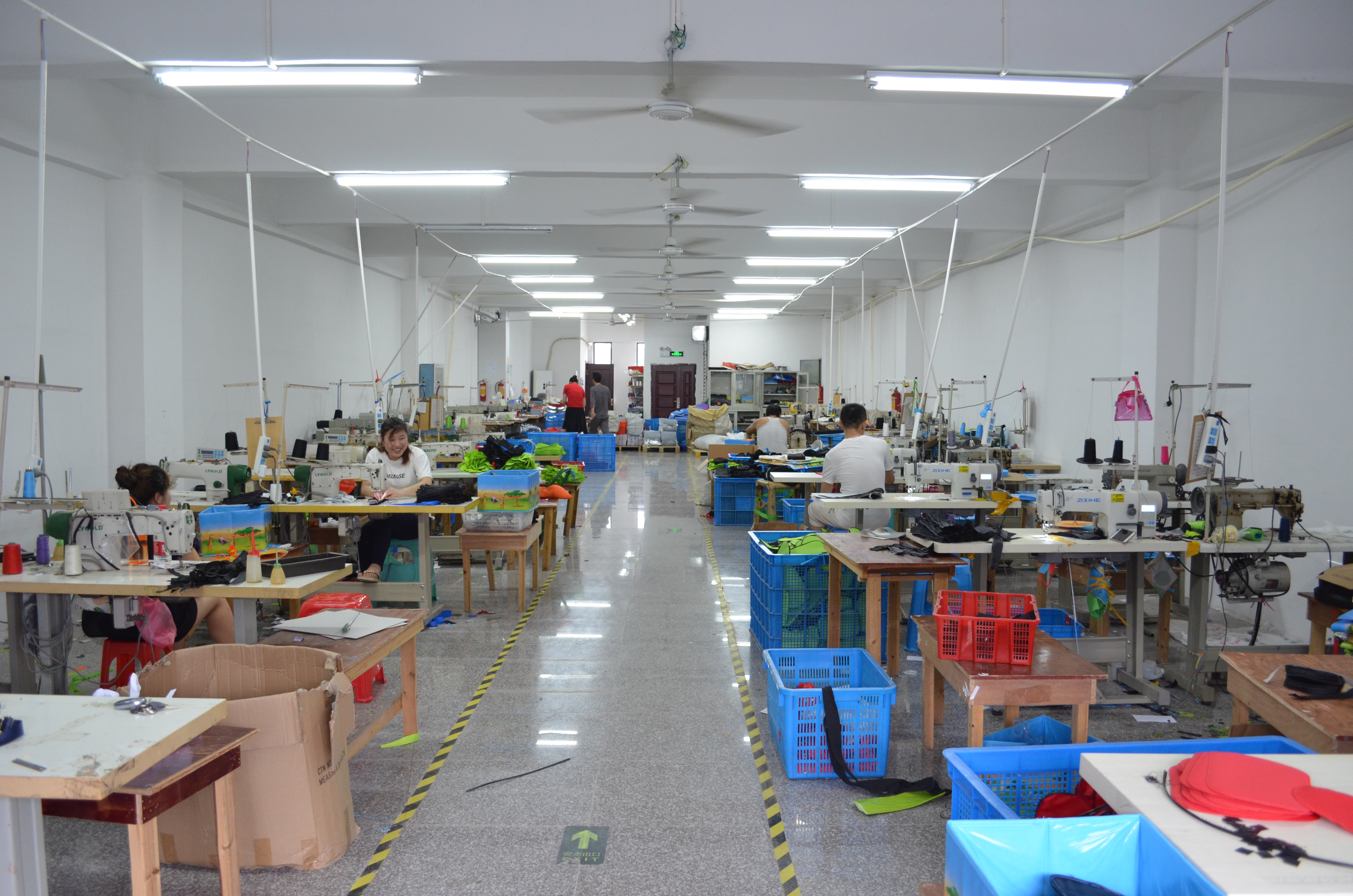
Product and material range. Zhejiang Hansun Arts & Crafts Co., Ltd. (brand: Hansun) is a Wenzhou-based bag manufacturer founded in 1996, operating a 25,000 m² factory with 200 employees and 25 R&D engineers, and an annual output of 20,000,000 units across tote bags and PVC bags. Around 70% of production is exported, with sales and service covering Southeast Asia, Europe, North America and the Middle East.
Customization capability. Hansun runs OEM/ODM production with customization of logo, size and material, a monthly capacity of 1,500,000 units, a 3,000-piece MOQ, a 30–45 day lead time, quality control configured to customer requirements, and remote after-sales support.
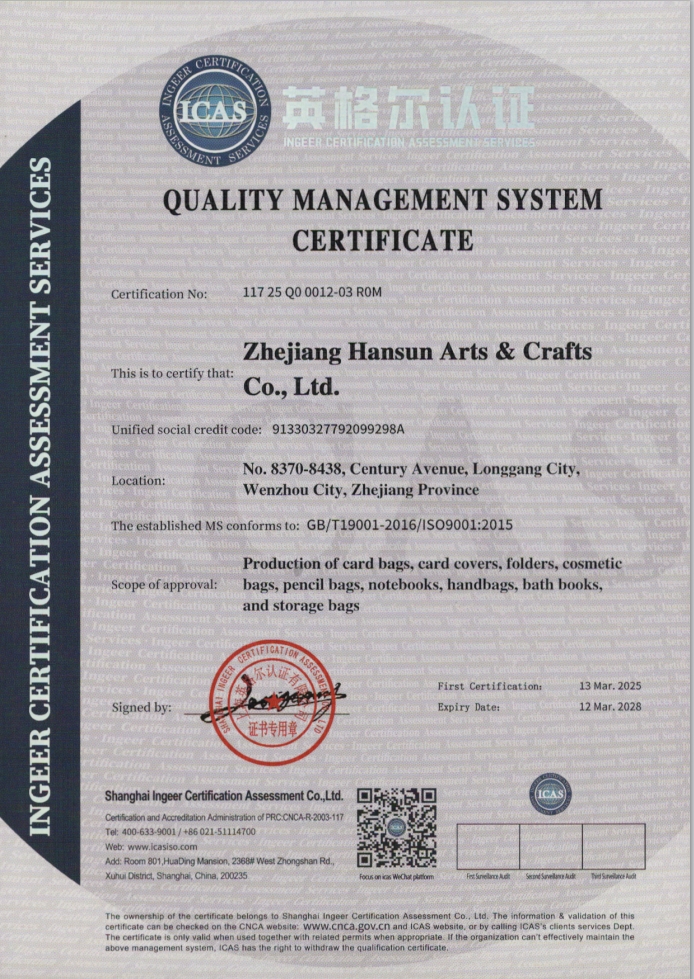
Management system certification. ISO 9001:2015 (certificate ISO-2026-7890, issued by an international certification body) covers product design, production, quality control and delivery processes — the four stages a promotional cosmetic bag order passes through. Scope matters as much as the certificate itself: a quality management certificate that covers design and delivery tells you more than one covering administration only.
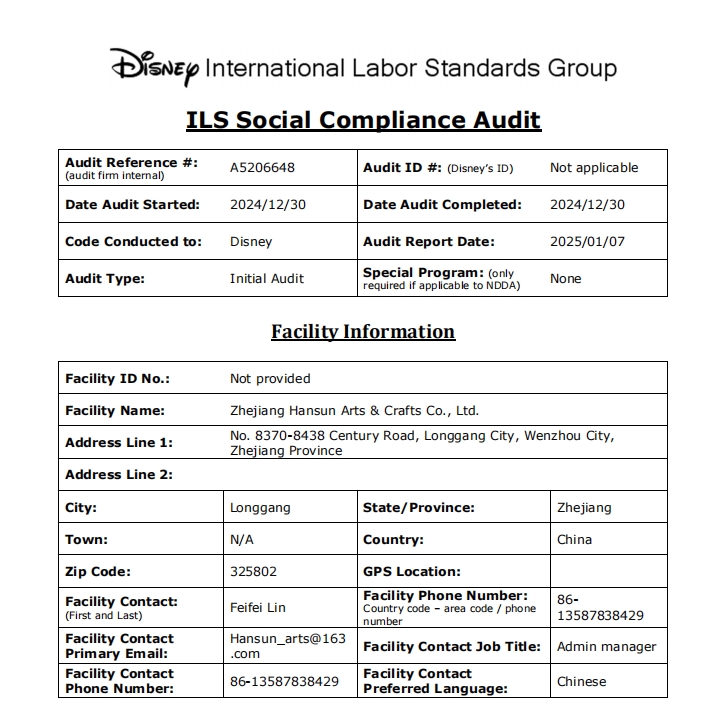
Social compliance and licensed goods. Amfori BSCI (certificate BSCI-2026-4567) covers factory social responsibility, ethical sourcing and working conditions; Sedex SMETA 4-Pillar (certificate SEDEX-2026-0123) covers labour practices, health and safety and environmental standards; Disney FAMA (certificate DSN-FAMA-2026-001) authorises the production and supply of licensed promotional bags and gifts.
Because certification validity and scope change across audit cycles, ask for a current copy of each certificate with its validity dates, and confirm that the scope line matches the product you are buying. This is standard practice in retail supplier qualification, and a manufacturer that keeps its documentation current will answer quickly.
A delivery record that tests the process. In an OEM/ODM program for a Japanese retail client covering 1,000,000 units of reusable bags and promotional gifts, the project highlights were eco-friendly material, strict quality control and on-time delivery. The program maintained a 99.7% product qualification rate and zero delivery delay, and the client placed repeat orders for three consecutive years. For cosmetic bag buyers, the relevant point is not the figure itself but the combination: material discipline, quality control that holds at volume, and delivery that does not slip.
8. FAQ: Promotional Cosmetic Bag Questions Buyers Ask Before Ordering
Which certifications should we verify before ordering promotional cosmetic bags?
Match the document set to the destination market. Hansun’s compliance file includes ISO 9001:2015 (certificate ISO-2026-7890), whose scope covers product design, production, quality control and delivery processes; Amfori BSCI (BSCI-2026-4567) for factory social responsibility, ethical sourcing and working conditions; Sedex SMETA 4-Pillar (SEDEX-2026-0123) for labour practices, health and safety and environmental standards; and Disney FAMA (DSN-FAMA-2026-001) for the production and supply of licensed promotional bags and gifts. For the EU, add REACH documentation for materials, inks and coatings; for the US, MoCRA registration and product listing requirements now reach into cosmetic accessories; and for exports from China, GACC Decree No. 284, effective 1 December 2026, introduces risk-based customs supervision with digital verification and traceability. Always request current certificate copies with validity dates and confirm the scope covers the product you are buying.
Can one manufacturer handle both the bag and the logo decoration?
It should, because the two decisions interact. Hansun runs OEM/ODM production with customization of logo, size and material, supported by 25 R&D engineers and a 25,000 m² factory with 200 employees. The cosmetic bag platform (model CB-2026-002) covers transparent PVC cosmetic bag, PU leather and travel toiletry formats, with decoration through hot stamping, UV printing, embossing and heat sealing. Monthly capacity is 1,500,000 units, which means a validated sample specification can be scaled without changing supplier or tooling.
What drives the cost of a wholesale cosmetic bag?
Unit cost is driven by material type and grade; bag weight, typically 20–80 g per piece; size, with common formats of 15×10 cm, 20×15 cm and 25×18 cm, all customizable; decoration method and coverage; hardware such as the zipper closure; accessories including webbing, hang tags and brand stickers; and order quantity relative to the 3,000-piece MOQ. Compliance requirements can also move cost when they change the material grade — for example where a food-grade or contact-appropriate PVC grade, an eco-friendly formulation, or REACH documentation is specified. The reliable way to compare quotes is to fix the specification first and then compare, rather than comparing unit prices against different specifications.
How do we validate a sample before mass production?
Request the sample in the production material and decoration, then test it the way the user will: rub the printed area, fold along the natural crease lines, wipe the surface repeatedly, close it while slightly damp, and inspect the webbing, zipper pull, hang tag and brand sticker attachment. Sampled cosmetic bags are reviewed in the Hansun sample room against the buyer’s written specification, and the approved sample then becomes the reference for the production run. Wear that appears at sampling is a specification problem that can still be fixed; the same wear after delivery is a brand problem.
What lead time and order quantity should we plan for, and how do we start?
Plan on a 3,000-piece MOQ and a 30–45 day production lead time, with a monthly capacity of 1,500,000 units if the program scales. The fastest way to start is to send your carry scenario, artwork and target market, and ask for a sample and quotation against that brief: contact Naomi at hansun20@hansungift.com, by phone on +86 13655771851, or on WhatsApp at +60 10-8838562. A full product and certification overview is available in the Hansun brochure.
9. Next Step: Validate the Specification on a Sample, Not on a Spreadsheet
A promotional cosmetic bag that survives a rainy commute is not the result of a better printing machine alone. It comes from four decisions made in order: the base material matched to the carry scenario, the decoration method matched to the substrate, the logo placed away from friction, and the compliance documentation confirmed before the purchase order. Get those right and the logo is still legible while the bag is still in use — which is the only moment a promotional bag actually earns its cost.
Start with a sample. Send your carry scenario, logo artwork and destination market to Hansun, and we will propose the material, decoration and accessory specification, then produce a sample for wear testing.
Email: hansun20@hansungift.com | Tel: +86 13655771851 | WhatsApp | hansungift.com
Have Questions or Need More Details?
Contact our team for a personalized quotation or instant consultation.
Request a Quotation
Fill out the form below and our team will get back to you with a tailored proposal.
WhatsApp Direct Chat
Prefer to chat in real-time? Message us on WhatsApp for instant assistance & quick answers.
- Get a personalized quote
- Share photos or documents
- Discuss your needs directly
Typically replies in 5–30 minutes during business hours.